
NEWS
Tim Walz Mobilizes National Guard in Minneapolis — But the Real Story Isn’t What You Think

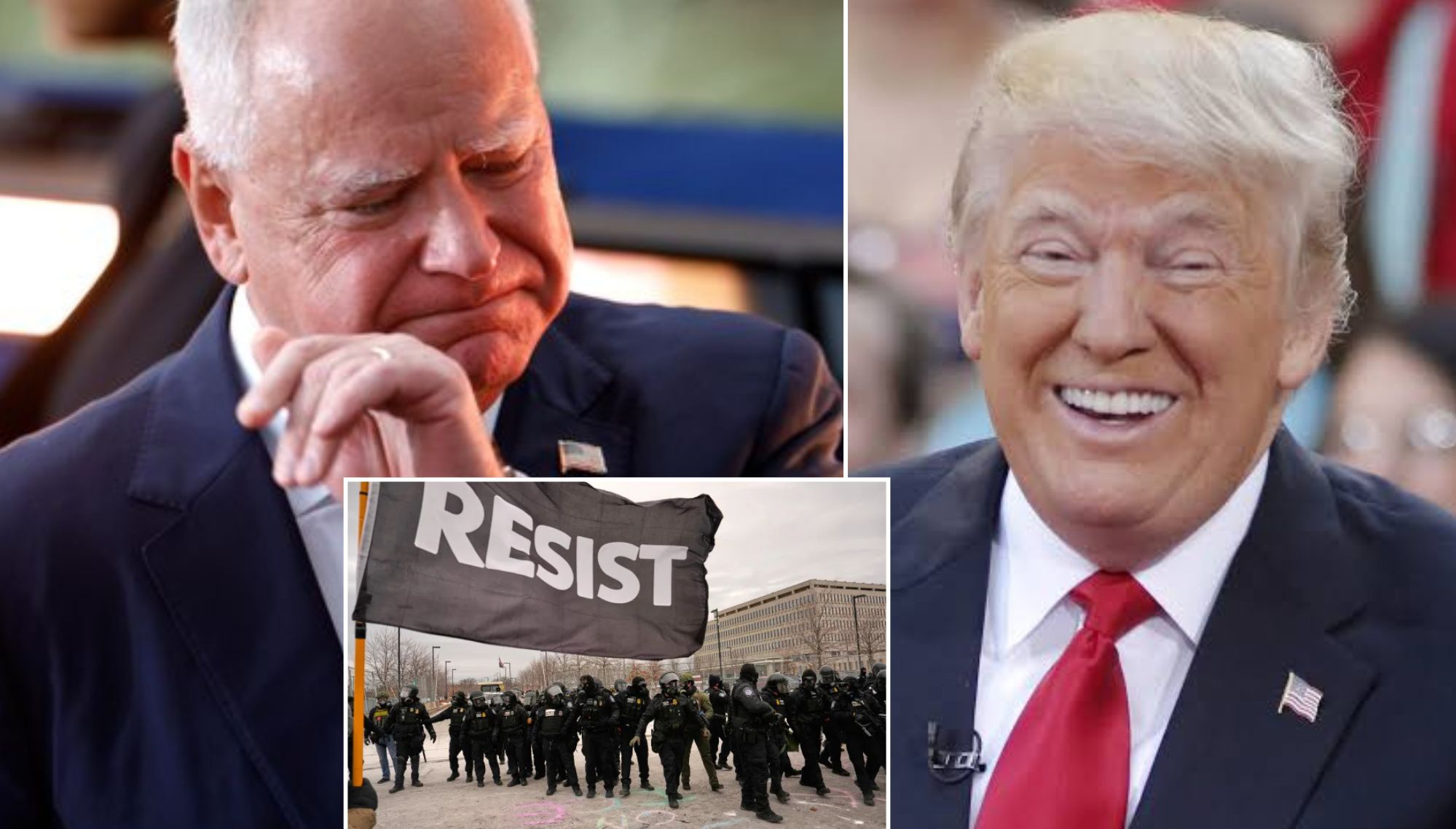
Recent weeks have thrust Minneapolis back into the national spotlight, not just for protests, but for a complex political and legal battle.
Central to the controversy is Minnesota Governor Tim Walz’s decision to prepare the state’s National Guard amid ongoing unrest tied to federal immigration enforcement actions.
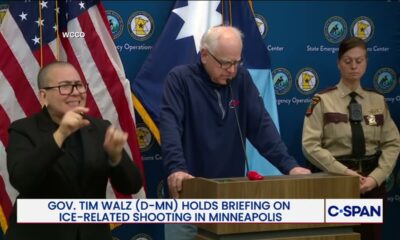
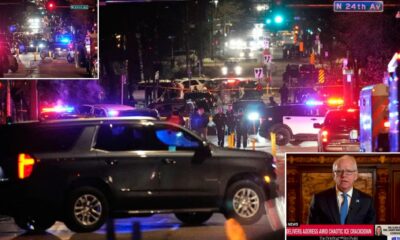
On January 7, 2026, Governor Walz issued a warning order to prepare the Minnesota National Guard to assist local law enforcement if necessary after a federal Immigration and Customs Enforcement agent fatally shot a Minneapolis woman during a protest.
The Guard was placed on heightened readiness, meaning they were staged and prepared but not yet widely deployed on city streets.
Their role was intended to protect critical infrastructure, aid local authorities if unrest escalated, and ensure public safety in a volatile environment.
Despite this, social media reports circulated claiming that the Guard was “standing by while people were getting assaulted” or siding with federal agents.
While tensions on the ground are real, these claims do not reflect an official mandate for the Guard to act against civilians or the police.
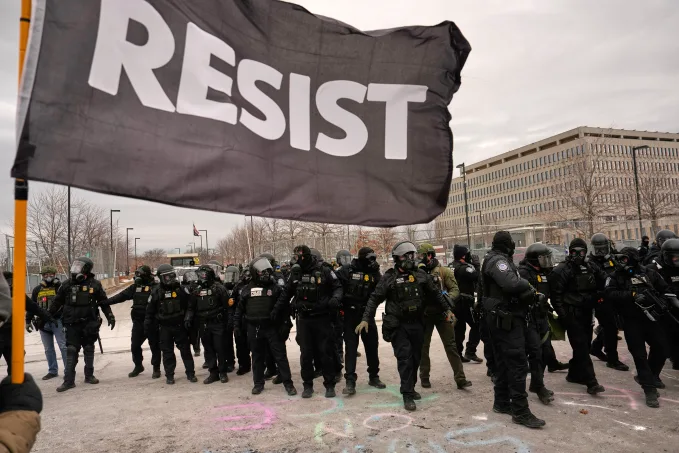
The situation is complicated by a larger clash between Minnesota’s state leadership and the Trump administration. President Donald Trump publicly threatened to invoke the Insurrection Act, a rarely used federal law that would allow federal forces to intervene statewide, in an effort to quell unrest linked to immigration enforcement protests.
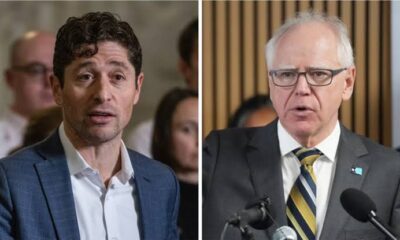
Governor Walz and Minneapolis Mayor Jacob Frey have strongly opposed the federal government’s approach, framing it as heavy-handed and an infringement on civil liberties.
Their criticisms have escalated to the point that the Department of Justice opened a criminal investigation into Walz and Frey, accusing them of potentially obstructing federal immigration enforcement — a charge the state leaders reject as politically motivated.

Across Minneapolis, tensions remain high. Demonstrations have included both peaceful expression and clashes with law enforcement.
A federal judge recently imposed restrictions on how ICE agents may interact with protesters, curbing use of force and arrests during lawful demonstrations.
Meanwhile, reports indicate that Minneapolis and surrounding areas have seen violent incidents, including shootings and confrontations that have intensified public anxiety.
There are a few key reasons the situation feels chaotic. Deploying the National Guard does not mean they are actively controlling crowds yet, but people on the ground have spotted Guard units near strategic points, fueling uncertainty about their role.
The dispute between state and federal leaders has turned what may have been a local safety measure into a symbol of political conflict, with accusations flying in both directions.
Talk of the Insurrection Act and potential federal troop deployments, even if hypothetical, stokes fear that normal law enforcement could be replaced by military-style authority. Experts note that invoking such laws is extremely rare and historically limited to extraordinary crises.
Governor Walz insists the Guard is being prepared out of caution and not to suppress dissent. He has emphasized that the Guard belongs to Minnesota and should not be used as a “prop in a national political fight.”
The legal and political battles are far from over. With the Department of Justice probe, court orders limiting ICE actions, and continued protests, Minnesota stands at a crossroads between state sovereignty, federal authority, and fundamental questions about how public safety is maintained in times of unrest.
This isn’t just about a mobilized force on standby — it’s about trust, power, and how communities interpret the actions of leaders in moments of national tension.








10 MINUTES AGO: Washington in Panic as President Donald Trump Shot Again While Exiting the White House and Urgently Rushed to the Hospital – Is This a Stunt to Distract from the Epstein Files? Here Are the Full Details

Furious Rep Melanie Stansbury Takes a Bold Move against Trump and his Associates in the Epstein Files after her recent interview, but she might not be safe after this move

BREAKING: Bad Bunny Files Stunning $500 Million Lawsuit Against Donald Trump, Claiming The President’s Super Bowl LX Halftime Remarks Were Made With “Actual Malice” and it’s Causing Severe Reputation Damage

Travis Kelce and Taylor Swift Turn Heads After Appearing at NFL Honors, and Fans Can’t Stop Talking About Taylor’s Unusually Elegant Silver Mini Dress… See Photos

Travis Kelce admitted to cheating on fiance Taylor Swift’s because…

Taylor Swift calls off engagement and wedding plans with Ex Travis Kelce and reveals one shocking reason why

“Why am I being dragged into this?”: Travis Kelce frustrated as Taylor Swift parents stops him from getting married to their daughter because of Austin

“Travis Has Crossed the Line” — Taylor Swift Breaks Her Silence and Reveals What Travis Kelce Did That She Says She Will Never Forgive

Taylor Swift Announces Her Mom and Dad Are Divorcing, Then Says “Travis and I Are No…” — Full Details

Taylor Swift Secretly Bought the Kansas City Chiefs for $14 Billion — Sources Say She Did It to “Protect Travis’s Legacy”

JUST IN: House Democrats are said to be only five votes short of moving forward with Trump’s impeachment, as political pressure rises and a single vote could shift the outcome in Washington.
