
NEWS
Supreme Court appears ready to side with Trump on power to fire independent regulators as liberal justices warn it could upend the federal government

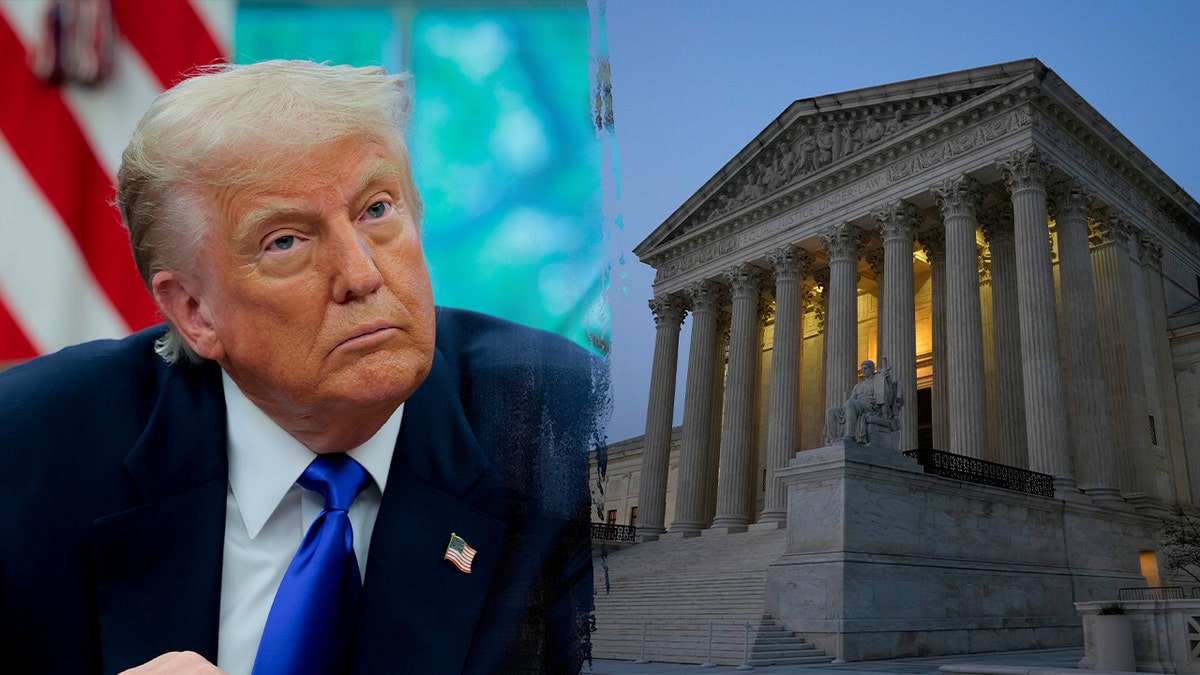
The Supreme Court appears to be moving closer to a monumental decision that could hand Donald Trump an extraordinary expansion of presidential authority, and Washington is bracing for impact. During the latest round of arguments, several conservative justices signaled clear openness to the idea that a president should have full power to fire leaders of independent regulatory agencies — a power that past presidents, including Trump, have openly wanted but never fully achieved. The tension inside the courtroom was thick, and everyone watching understood that this wasn’t just another legal dispute. It was a direct confrontation with nearly a century of how the federal government has functioned.
For decades, agencies like the Federal Trade Commission, the Securities and Exchange Commission, the Federal Reserve Board, and others have operated with a degree of independence designed to prevent pure political influence from steering crucial regulatory decisions. Their leaders could only be removed “for cause,” meaning misconduct or inability to carry out their duties. But the justices now appear ready to revisit and possibly dismantle that protection, arguing that modern agencies wield enormous executive power and should therefore be fully answerable to the president alone.
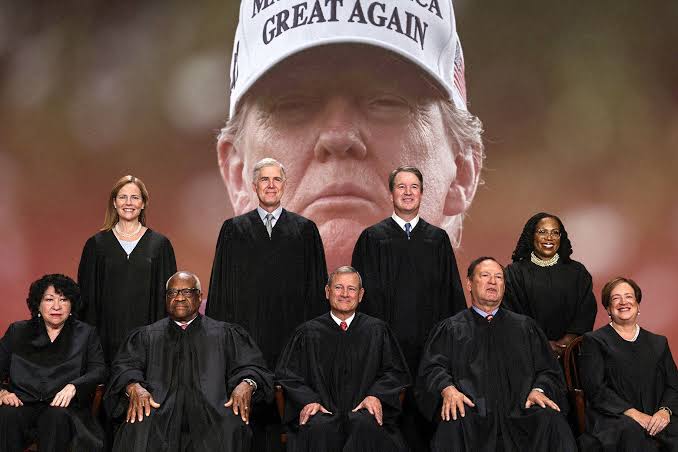
Inside the courtroom, the conservative justices repeatedly questioned whether the old standards still make sense. Some argued that these agencies have evolved far beyond what previous courts imagined, exercising powers that directly affect the economy, national security, technology, and everyday American life. If they hold such influence, the argument goes, then the president should have the constitutional authority to remove their leaders at any time without needing to prove wrongdoing. It was clear that several members of the Court were already leaning toward that interpretation.
But the liberal justices did not hide their alarm. They warned that giving the president unilateral firing power could fundamentally upend the structure of government, crippling the independence of experts who are supposed to enforce laws without political pressure. One justice cautioned that the ruling could produce a level of presidential control that the founders never intended, opening the door to a government where scientific, economic, and regulatory decisions are made not by qualified professionals but by whoever is most loyal to the president in power. Another warned that such a shift could destabilize entire sectors of government, from consumer protection to financial oversight, leaving millions of Americans vulnerable to unchecked political swings.
The clash on the bench reflected a deeper national debate. Supporters of expanded presidential power argue that independent agencies have become too insulated, operating like miniature governments with little accountability. They believe that allowing the president to fire agency heads at will will streamline decision-making, reduce bureaucratic gridlock, and let elected leadership — not unelected regulators — set the direction of the country. Critics, however, see the potential ruling as a dangerous consolidation of power, one that could erase the safeguards designed to prevent any single president from controlling every corner of the federal system.
If the Supreme Court sides with Trump, the shift wouldn’t be symbolic. It would be immediate, sweeping, and felt across the entire government. Presidents could replace agency heads overnight, reshaping the regulatory landscape with unprecedented speed. Entire policies could flip within hours. Investigations could be halted or aggressively pushed. Financial oversight, environmental protections, labor rules, data privacy enforcement — all could be reshaped under direct presidential control.
The decision would mark one of the most significant restructurings of American governance in modern history. For Trump’s allies, it would be seen as a long-awaited liberation from what they view as entrenched bureaucratic resistance. For his critics, it would be seen as the unraveling of a system built to protect citizens from absolute power.
And as the courtroom emptied and analysts scrambled to interpret each justice’s tone and phrasing, whispers began to circulate through Washington. If the Court does rule in Trump’s favor — something that now seems increasingly likely — the nation could be only days or weeks away from a dramatic jolt to the federal system. Insiders close to the situation claim that if the decision lands the way observers expect, the very first move Trump is preparing to make is something so disruptive, so unprecedented, that even longtime Washington operatives admit they have never seen anything like it.
What that move is remains tightly guarded — but those who claim to know it say it could shake Washington in a way no one is prepared for.









10 MINUTES AGO: Washington in Panic as President Donald Trump Shot Again While Exiting the White House and Urgently Rushed to the Hospital – Is This a Stunt to Distract from the Epstein Files? Here Are the Full Details

Furious Rep Melanie Stansbury Takes a Bold Move against Trump and his Associates in the Epstein Files after her recent interview, but she might not be safe after this move

BREAKING: Bad Bunny Files Stunning $500 Million Lawsuit Against Donald Trump, Claiming The President’s Super Bowl LX Halftime Remarks Were Made With “Actual Malice” and it’s Causing Severe Reputation Damage

Travis Kelce and Taylor Swift Turn Heads After Appearing at NFL Honors, and Fans Can’t Stop Talking About Taylor’s Unusually Elegant Silver Mini Dress… See Photos

Travis Kelce admitted to cheating on fiance Taylor Swift’s because…

Taylor Swift calls off engagement and wedding plans with Ex Travis Kelce and reveals one shocking reason why

“Why am I being dragged into this?”: Travis Kelce frustrated as Taylor Swift parents stops him from getting married to their daughter because of Austin

“Travis Has Crossed the Line” — Taylor Swift Breaks Her Silence and Reveals What Travis Kelce Did That She Says She Will Never Forgive

Taylor Swift Announces Her Mom and Dad Are Divorcing, Then Says “Travis and I Are No…” — Full Details

Taylor Swift Secretly Bought the Kansas City Chiefs for $14 Billion — Sources Say She Did It to “Protect Travis’s Legacy”

JUST IN: House Democrats are said to be only five votes short of moving forward with Trump’s impeachment, as political pressure rises and a single vote could shift the outcome in Washington.
