
NEWS
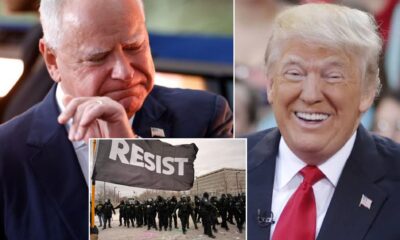
Breaking: Justice Department Opens Criminal Investigations Into Minnesota Gov. Tim Walz and Minneapolis Mayor Jacob Frey Amid Federal Immigration Clash

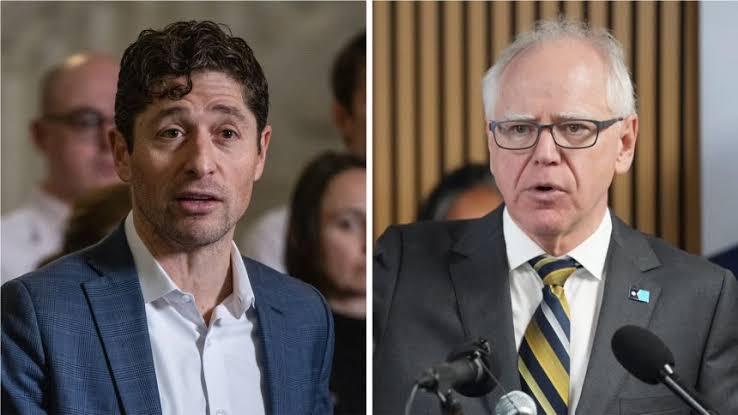
What began as mounting political tension in Minnesota has now escalated into a full-scale federal investigation.
The U.S. Department of Justice has confirmed that it has launched criminal probes into Minnesota Governor Tim Walz and Minneapolis Mayor Jacob Frey, marking one of the most dramatic confrontations yet between the Trump administration and Democratic state and city leadership.
According to officials familiar with the matter, federal prosecutors are examining whether Walz and Frey unlawfully interfered with federal immigration enforcement operations carried out by Immigration and Customs Enforcement agents in and around Minneapolis.
The investigation centers on whether public statements and actions taken by the two leaders crossed the legal line from political opposition into criminal obstruction of federal law enforcement.
Sources say the inquiry involves a federal statute that prohibits conspiracies to prevent federal officers from carrying out their duties through intimidation, interference, or coordinated resistance.
While no charges have been filed, subpoenas have reportedly been issued as part of an active grand jury investigation.
The Justice Department has declined to comment on specific evidence or timelines, underscoring the sensitivity of the case.
The investigation follows weeks of turmoil sparked by a massive federal immigration enforcement surge in the Twin Cities region.
Thousands of ICE and Border Patrol agents were deployed as part of a broader Trump administration push to aggressively enforce immigration laws.
The operation quickly became a flashpoint, igniting protests, confrontations, and widespread criticism from state and local officials.
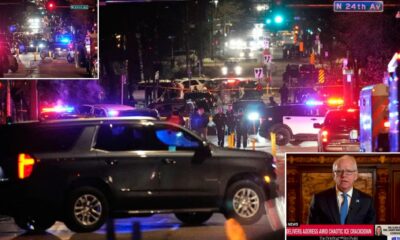
Tensions intensified after a fatal shooting involving an ICE agent during an enforcement operation in North Minneapolis.
The incident sent shockwaves through the city and fueled days of protests, with demonstrators demanding accountability and the withdrawal of federal agents.
Local leaders accused the federal government of escalating violence and destabilizing communities, while federal officials insisted the operation was lawful and necessary.
Mayor Jacob Frey emerged as one of the most outspoken critics of the federal presence, warning that the surge placed local police and residents in an impossible position. Governor Tim Walz echoed those concerns, urging Minnesotans to document ICE activity and calling for transparency and oversight.
Federal officials, however, interpreted some of those remarks as encouragement to interfere with ongoing law enforcement operations.
The Trump administration has framed the investigation as a matter of upholding the rule of law. Administration officials have accused Minnesota’s leadership of undermining federal authority and emboldening resistance to lawful enforcement.
Homeland Security officials have publicly suggested that encouraging citizens to monitor or confront federal agents could constitute a serious crime.
Walz and Frey have forcefully rejected those accusations.
Both leaders have characterized the investigation as a politically motivated attempt to intimidate Democratic officials who oppose the administration’s immigration agenda. Walz has accused the federal government of weaponizing the justice system, while Frey has maintained that defending civil liberties and public safety does not amount to obstruction.
Legal experts note that public criticism of federal policy is generally protected under the First Amendment, and that criminal obstruction cases typically require clear evidence of coordinated, unlawful actions rather than rhetoric alone. Still, the mere fact that a sitting governor and a major city mayor are under federal criminal investigation is highly unusual and carries enormous political weight.
The probes are unfolding amid an already volatile national debate over immigration enforcement, federal authority, and the limits of state and local resistance. They also raise significant constitutional questions about the balance of power between federal agencies and elected state officials, especially when public safety and civil rights are at the center of the conflict.
For now, the investigations remain ongoing. It is unclear whether prosecutors will ultimately pursue charges or whether the case will end without formal action. What is clear is that Minnesota has become ground zero in a broader national struggle over immigration, executive power, and political retaliation.
As federal investigators continue their work behind closed doors, the outcome could shape not only the futures of Tim Walz and Jacob Frey, but also the precedent for how far the federal government can go when confronting state and local leaders who openly challenge its policies.








Taylor Swift Reveals Her Mom Is Facing Cancer Again: ‘I Give All of My Worry to Real Problems Now’

Travis Kelce Gives Fans a Glimpse Into His Family Vacation in St. Barts as Wife Taylor Swift Relaxes Under the Tent While He Shows Off His Unexpected Master-Chef Skills During a Fun-Filled Outdoor Cooking Moment..See the videos and photos

OMG!! Taylor Swift and Travis Kelce Finally Confirm That… See Full Details

“Taylor Swift went grocery shopping with Travis Kelce’s mom, Donna, and sister-in-law, Kylie. The pop star is already fitting right in with the family and is also looking like…See 10 Beautiful Photos

Taylor Swift and Travis Kelce Melt Hearts With a Sweet Garden Embrace and Playful Barefoot Dance, Giving Fans a Rare Glimpse Into Their Fun-Filled, Romantic Married Life as They Unwind Together Before the Kansas City Chiefs’ Big Game

TAYLOR SWIFT AND TRAVIS KELCE’S QUIET POST-GAME MOMENT MELTS HEARTS! After the NFL Game, the Couple Retreats to a Peaceful Private Setting, Sharing a Tender Kiss and Sweet Glances Through the Window as They Simply Enjoy Being Close to Each Other..

Looks Like His Wife Dresses Him’ — Fans Sense Taylor Swift in Travis Kelce’s Stylish Outfit for Chiefs Preseason Game 1

Taylor Swift and Brittany Mahomes plan to surprise their husbands and to support their game tonight…

NO LONGER THE RUMOR: Just one hour ago, Travis Kelce dropped the long-awaited announcement we’ve all been hoping for…

Travis Kelce flashes his wedding ring as he arrives for first Chiefs game tonight since marrying Taylor Swift… but his new wife is not spotted in the stands…

Travis Kelce Spotted on a Stroll With Wife Taylor Swift and a Baby Bump Just Weeks After Their Wedding, and Fans Are All Saying the Same Thing… See the Photos
