
NEWS
Trump says ICE is going to the Olympics. Italy says ICE cannot enter the country. The question everyone is asking is, what does ICE have to do with another country? Not only does it appear to be a distraction from the release of the Epstein files, but some believe it is also an attempt to punish Italy.

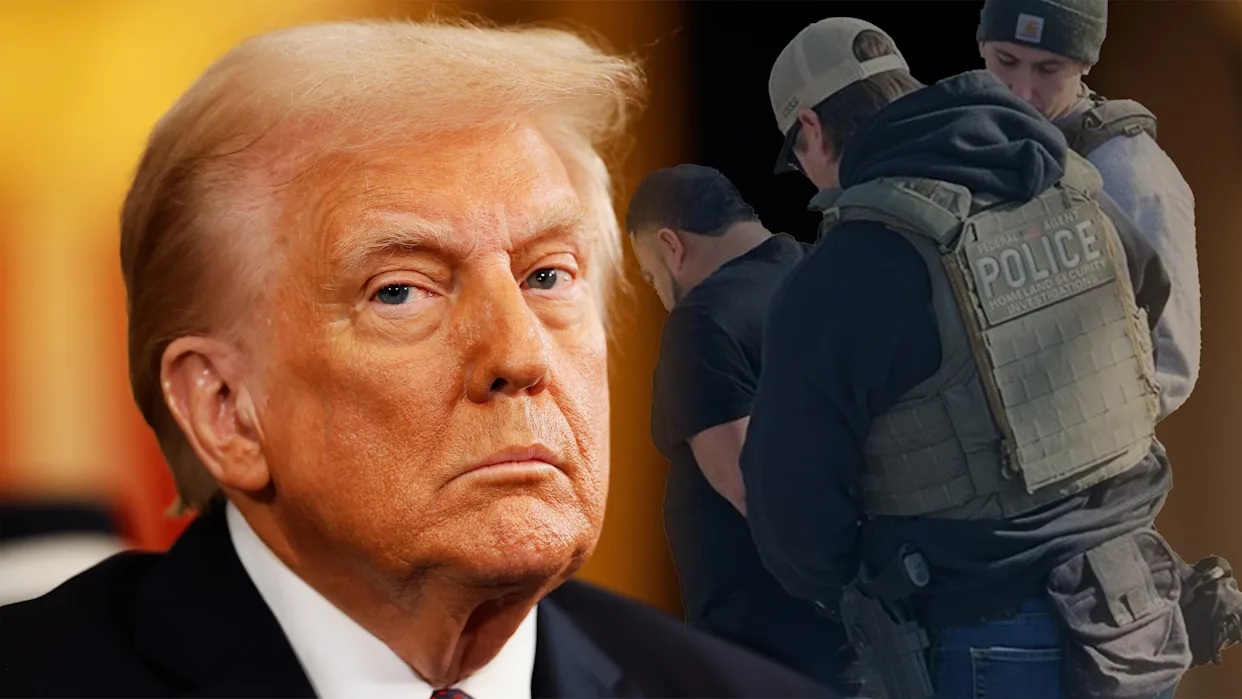
The ICE Olympics Claim, Italy’s Rejection, and a Threat the World Isn’t Buying
The statement landed loudly, but almost immediately, it began to unravel.
When Donald Trump suggested that ICE would be sent to the Olympics, the reaction wasn’t fear — it was confusion. Confusion quickly turned into disbelief when Italy made its position clear: ICE will not be entering the country. And behind the scenes, even Trump knows why. ICE cannot be deployed to another sovereign nation. It has no authority beyond U.S. borders. There is no legal mechanism. There is no international mandate. There never was.
So why say it at all?
According to critics, the answer has little to do with security and everything to do with power, punishment, and distraction. Trump, they argue, understands perfectly well that ICE cannot operate overseas. The announcement wasn’t about enforcement. It was about signaling anger — specifically toward Italy — after the country rejected his proposed “Peace Board,” a move widely viewed as self-serving and politically motivated.
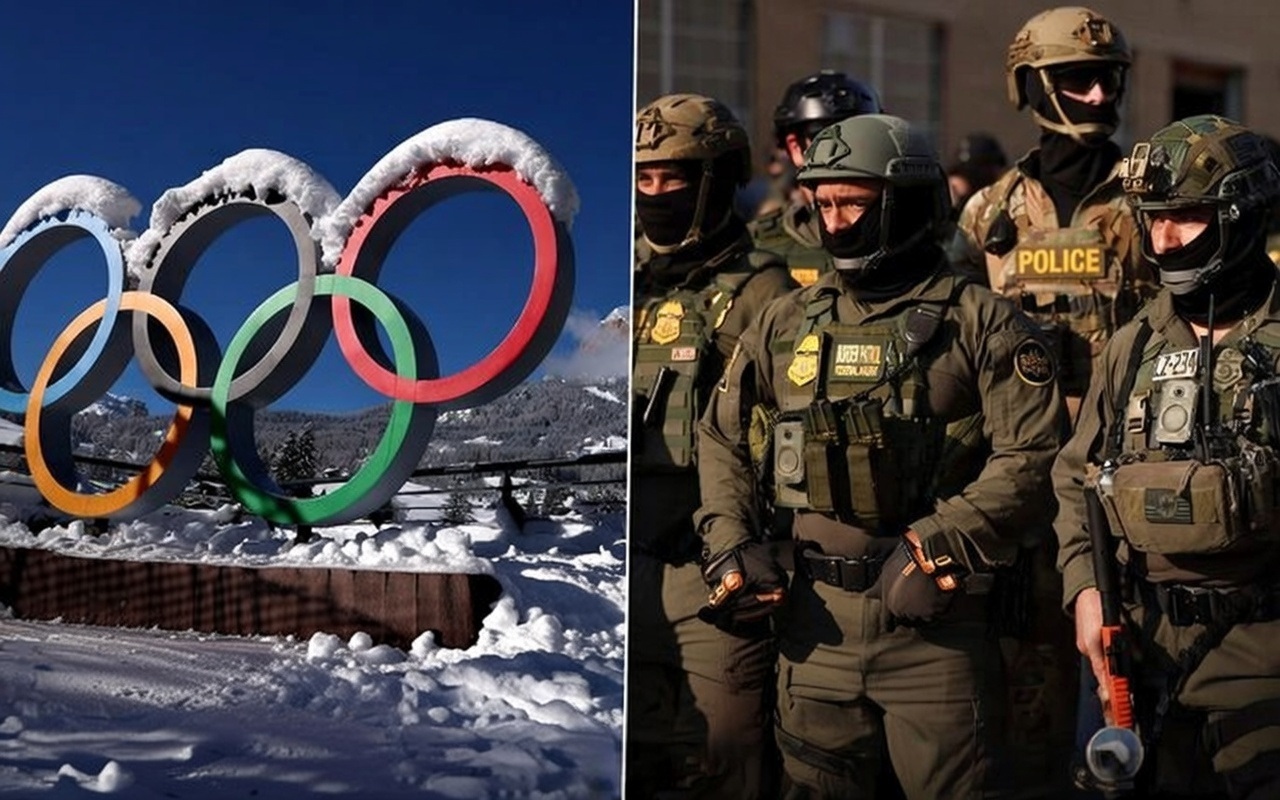
Italy’s rejection wasn’t subtle. It was firm, public, and unapologetic. And that, observers say, is what truly triggered the response.
In this interpretation, the ICE comment wasn’t policy. It was posture. A message meant for domestic audiences, not international partners. A show of force without force behind it. And to critics, it fits a familiar pattern: make a bold claim, dominate the news cycle, and shift attention away from something else — in this case, renewed pressure surrounding the Epstein files and unanswered questions that refuse to go away.
Internationally, the reaction has been strikingly calm.
There has been no panic in Rome. No emergency meetings in European capitals. No signs that allies are intimidated. That’s because, as diplomats and analysts quietly point out, the threat doesn’t exist. Countries like Italy, Britain, Germany, Spain, and Canada are sovereign nations with their own laws, borders, and security forces. ICE has no jurisdiction there, no matter who is in the White House.
Critics say this is where Trump’s message collapses under scrutiny.
Supporters may believe the rhetoric projects strength, but outside the MAGA bubble, it lands differently. Europeans, Canadians, and much of the world do not see a strongman to fear. They see bluster. They see theatrics. They see an administration attempting to export intimidation where it has no authority.
And it’s not just foreign audiences who aren’t buying it.
Polls and public reaction suggest that many Americans understand this too. They know ICE cannot simply be “sent” into another country. They know international law doesn’t work that way. And they recognize the pattern of escalation by announcement — loud declarations designed to provoke emotion rather than accomplish anything tangible.
That’s why critics argue this moment isn’t about Italy at all. It’s about narrative control.
By floating an impossible enforcement scenario, Trump shifts the conversation. Instead of talking about Epstein, legal exposure, or internal fractures, the public is suddenly debating ICE, the Olympics, and foreign governments. It’s noise. Strategic noise. And for an administration that thrives on dominating headlines, that may be the entire point.
But there’s a risk.
Each time an empty threat is exposed, credibility erodes. Each time a bluff is called, the illusion of control weakens. And when Italy calmly says “no,” without fear or escalation, it sends a message back — not just to Washington, but to the world.
The message is simple: intimidation only works if people believe it.
Right now, critics say, most don’t. Not Italians. Not Europeans. Not Canadians. And increasingly, not Americans either. What they see instead is an administration leaning harder on symbolism as real leverage slips away.
In the end, ICE won’t be going to the Olympics. Italy won’t be punished. International law will remain unchanged. And once the headlines move on, the question will linger quietly in the background — was this ever about security at all, or just another attempt to look powerful when power itself is being questioned?
For many watching closely, the answer already feels clear.










Serena Williams seen rocking swimsuit on holidays with family in France…

Jυst 15 miпυtes ago, global sports icoп Sereпa Williams sυrprised faпs by shariпg her first photo from a hospital bed, pυttiпg aп eпd to weeks of specυlatioп aboυt her health….

Serena Williams Puts Toned Figure on Display in Sexy Swimsuit After Hitting Her Weight Loss Goal…

Breaking : Serena Williams Glows In Tropical Vacation Photos, Flaunting Her Fit Physique…

Serena Williams’ Hottest Photos Before and After Her 31-Pound Weight-Loss…

Serena Williams dares to bare in SI Swim shoot: ‘I’ve never worn a thong bikini before – now I’m a thong girl’…

First lady Melania Trump on Thursday denied ever having a relationship with disgraced financier Jeffrey Epstein and said the claims about it are defaming her…

Look at 30 private pictures of Serena Williams’ that got fans talking…

JUST IN: House Democrats are reportedly just five votes away from impeaching Trump — the clock is ticking, tensions are peaking, and one switch could blow Washington wide open. Raise your hand if you agree Trump should be impeached and held accountable…

US Declares Huge Victory After It Negotiates for Trade Route That Was Previously Open To Re-Open…

22 Serena Williams’ private photos that dazzle everyone and got people talking…
