Connect with us

NEWS

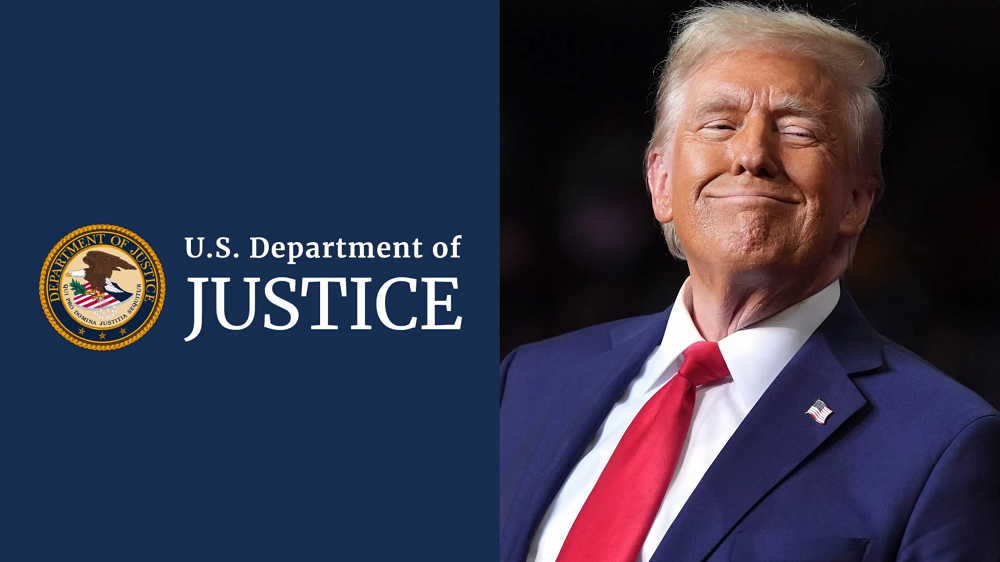
The Justice Department has DELETED all the files which had various allegations against Trump, including rape and trafficking in the newly released Epstein files

Published

on

The Justice Department has DELETED all the files which had various allegations against Trump, including rape and trafficking in the newly released Epstein files

Shockwaves are rippling through political and legal circles after claims emerged that the Justice Department has deleted files tied to the newly released Jeffrey Epstein materials—files that allegedly contained serious allegations against Donald Trump, including rape and trafficking. The assertion, explosive in both scope and implication, has immediately triggered outrage, denials, confusion, and a fresh wave of mistrust toward institutions already under intense public scrutiny.

According to the claims circulating online and among activist legal observers, certain digital records once associated with Epstein-related disclosures are no longer accessible through Justice Department systems. The most incendiary part of the allegation is not merely that files are missing, but that they reportedly referenced accusations involving Trump—accusations that, if preserved and examined, could have fueled renewed legal and public accountability debates. At this stage, however, what exactly existed, what was removed, and why remains fiercely contested.

The Justice Department has not publicly confirmed that it deleted files connected to Trump, nor has it acknowledged removing any materials for the purpose of shielding a political figure. Officials and legal analysts caution that the Epstein case has generated a massive, chaotic archive over many years, spread across jurisdictions, agencies, and courts. Records can be sealed, redacted, reclassified, or removed from public-facing databases for procedural reasons that do not necessarily equate to destruction or concealment. Still, the timing and nature of these claims have raised eyebrows.

What has intensified the reaction is the broader context. Epstein’s network involved powerful individuals across politics, business, and entertainment, and the public has long suspected that full accountability was never delivered. Each new release of documents revives the same unresolved question: who was protected, and by whom? Against that backdrop, any suggestion that files naming a former president were deleted lands like gasoline on an already burning fire.

The Justice Department has DELETED all the files which had various allegations against Trump, including rape and trafficking in the newly released Epstein files

Trump has repeatedly denied any wrongdoing connected to Epstein, emphasizing that he was never charged and that he distanced himself from Epstein years before the financier’s arrest. Supporters argue that the current claims are another example of politically motivated narratives built on speculation rather than evidence. They warn that repeating unproven allegations risks turning rumor into assumed guilt, especially in a climate where distrust spreads faster than verification.

Critics, however, see something darker. They argue that even the appearance of missing files undermines confidence in the justice system. For them, the issue is not whether allegations are ultimately proven, but whether all relevant records are preserved and transparently handled. In their view, deletion—intentional or accidental—feeds a perception that powerful figures exist above the rules that govern everyone else.

Legal experts stress that the word “deleted” itself can be misleading. In many federal systems, records may be removed from one database while still existing in another archive, or temporarily taken offline pending review, litigation, or privacy concerns. Without clear documentation, it is difficult to determine whether files were destroyed, relocated, sealed, or never formally entered into the system in the first place. Yet the lack of immediate clarity has only deepened suspicion.

Social media reaction has been swift and brutal. Some users describe the alleged deletions as proof that accountability in America is selective. Others warn that misinformation surrounding the Epstein case has become so pervasive that even legitimate procedural actions are instantly framed as conspiracies. Between those poles sits a growing group of Americans who simply no longer know whom to trust.

What makes this moment especially volatile is how it intersects with an already polarized political environment. Trump remains a central figure in American life, and any claim touching on sexual violence or trafficking—particularly when linked to Epstein—cuts straight to raw nerves. The Justice Department, meanwhile, finds itself once again accused of either political bias or institutional weakness, depending on who is speaking.

Until verifiable evidence emerges clarifying what files existed, what their contents were, and what exactly happened to them, the story will remain suspended between allegation and denial. But the damage, at least to public confidence, may already be done. The perception that records can vanish—especially those involving the powerful—reinforces a sense that transparency is fragile and justice negotiable.

For now, the unanswered questions are louder than any official statement. Were files actually deleted, or merely moved? If allegations existed, why were they never fully addressed? And if nothing improper occurred, why does the system once again appear unable to communicate clearly and convincingly with the public?

In the long shadow of the Epstein scandal, even uncertainty feels like confirmation to many. And until the Justice Department provides a clear, documented account of what happened to the missing materials, the suspicion will linger that something important—whether evidence, trust, or truth—has been lost.


Click to comment

Leave a Reply

Your email address will not be published. Required fields are marked *

Philadelphia has moved into uncharted territory, introducing legislation that would sharply restrict how Immigration and Customs Enforcement operates within the city, signaling one of the most aggressive municipal challenges to federal immigration enforcement in recent memory. The proposal, unveiled amid rising national tension over immigration tactics, would fundamentally change the rules of engagement for ICE agents on Philadelphia streets. At the center of the legislation is a demand for visibility and accountability. Under the proposed rules, ICE agents would no longer be allowed to conceal their faces while operating in public. Masks, balaclavas, and other face coverings that obscure identity would be prohibited, and agents would be required to clearly display official identification at all times. City officials backing the measure argue that law enforcement wielding immense power should never be anonymous, especially in neighborhoods already strained by fear and mistrust. But the bill goes further, striking at the core of how immigration enforcement is carried out. ICE agents would be barred from conducting operations in Philadelphia without a warrant signed by a judge. Administrative paperwork or internal federal authorizations would no longer suffice. Supporters of the legislation say this is about restoring constitutional guardrails, ensuring that arrests and detentions meet the same judicial standards expected of any other law enforcement action that deprives a person of liberty. Perhaps the most explosive provision is the one drawing the most attention nationwide. If ICE agents engage in violence against bystanders, the legislation states, they will be arrested. No carve-outs. No special exemptions based on federal status. The message is unmistakable: federal authority does not grant immunity from local criminal law when civilians are harmed. City leaders framing the bill describe it as a necessary response to what they characterize as increasingly aggressive and opaque enforcement tactics. They argue that unmarked vehicles, masked agents, and sudden street arrests have created chaos and fear, often ensnaring not just targets but entire communities. According to proponents, this legislation is about restoring order, predictability, and basic civil rights, not obstructing the law. Opponents see it very differently. Critics warn that Philadelphia is inviting a direct confrontation with the federal government and setting the stage for a legal showdown that could end up in federal court. They argue that immigration enforcement is a federal responsibility and that cities lack the authority to dictate how federal agents operate. Some law enforcement voices have also raised concerns about officer safety, claiming that requiring agents to show their faces and identities could expose them to retaliation. Yet supporters counter that local police already operate under those exact conditions every day. They argue that transparency has not crippled city policing, and that the same standards should apply to federal agents interacting with civilians in public spaces. In their view, the risk to public trust posed by anonymous, masked enforcement far outweighs the operational inconvenience claimed by ICE. The political context surrounding the legislation is impossible to ignore. Across the country, cities and states are increasingly pushing back against federal immigration practices, citing concerns over civil liberties, racial profiling, and the erosion of community trust. Philadelphia’s proposal stands out not just for its scope, but for its bluntness. It does not merely discourage cooperation with ICE; it attempts to redefine the boundaries of acceptable conduct within city limits. Reaction from immigrant advocacy groups has been swift and emotional. Many describe the proposal as a long-overdue line in the sand, one that tells residents they will not be left defenseless when confronted by unidentified agents. For families who have lived with the constant fear of sudden detention, the promise of judge-signed warrants and visible identification feels like a measure of dignity restored. At the same time, federal officials and their allies are signaling that they may not accept the restrictions quietly. Questions are already swirling about enforcement, compliance, and what happens if ICE agents simply refuse to follow the city’s rules. Legal scholars note that while cities cannot nullify federal law, they can enforce their own criminal statutes, especially when it comes to assault, unlawful detention, and public safety. As the legislation moves forward, Philadelphia finds itself at the center of a national reckoning over power, accountability, and the limits of federal authority on local streets. Whether the bill ultimately survives legal challenges or sparks retaliation from Washington remains uncertain. What is clear is that the city has issued a bold declaration: enforcement in Philadelphia will no longer happen in the shadows. If passed, the legislation would mark a dramatic shift in how immigration enforcement intersects with local governance. It would transform routine operations into high-stakes tests of compliance and force a long-avoided confrontation over who truly sets the rules when federal power meets city streets. In doing so, Philadelphia may have ignited a debate that reaches far beyond its borders, one that could redefine the balance between security, liberty, and accountability across the country.
NEWS22 minutes ago

BREAKING:- Philadelphia introduced legislation to limit ICE. Agents can’t be masked, must show ID, and can only operate on warrants signed by a judge. If they attack bystanders, they will be arrested

The Justice Department has DELETED all the files which had various allegations against Trump, including rape and trafficking in the newly released Epstein files
NEWS26 minutes ago

The Justice Department has DELETED all the files which had various allegations against Trump, including rape and trafficking in the newly released Epstein files

BREAKING: US House Democrats Are Just 5 Votes Away From Impeaching Trump Before March 31
NEWS35 minutes ago

BREAKING: US House Democrats Are Just 5 Votes Away From Impeaching Trump Before March 31

MAJOR BREAKING: Senate passes bill banning law enforcement from wearing masks, includes ICE agents
NEWS22 hours ago

MAJOR BREAKING: Senate passes bill banning law enforcement from wearing masks, includes ICE agents

10 MINUTES AGO: “Before He Drags Us All Down”: Taylor Swift Makes an Unprecedented Plea to America’s Highest Powers "Congress and Supreme Court" to Stop Donald Trump
CELEBRITY22 hours ago

10 MINUTES AGO: “Before He Drags Us All Down”: Taylor Swift Makes an Unprecedented Plea to America’s Highest Powers “Congress and Supreme Court” to Stop Donald Trump

BREAKING: ICE agents are reportedly being ticketed by Minneapolis police for every petty infraction possible—including jaywalking, littering, and speeding one mile over the limit—and the police officers keep telling them, “You should have complied with the law, or stayed home.”
NEWS22 hours ago

BREAKING: ICE agents are reportedly being ticketed by Minneapolis police for every petty infraction possible—including jaywalking, littering, and speeding one mile over the limit—and the police officers keep telling them, “You should have complied with the law, or stayed home.”

“HE POOPS HIMSELF ON TV” - Trump Abruptly Ends Press Briefing as Reporters Are Rushed From the Oval Office After the Audience Couldn’t Hold Themselves Back From Disgust Over a Smell in the Room - Video Described as ‘Undeniable’ Is Being Removed Everywhere
NEWS1 day ago

“HE POOPS HIMSELF ON TV” – Trump Abruptly Ends Press Briefing as Reporters Are Rushed From the Oval Office After the Audience Couldn’t Hold Themselves Back From Disgust Over a Smell in the Room – Video Described as ‘Undeniable’ Is Being Removed Everywhere

BREAKING: The U.S. Congress Officially Launches Impeachment Proceedings Against President Donald Trump, Drafting Detailed Articles Alleging Embezzlement, Fraud, War Crimes, Obstruction of Justice, Abuse of Power, and Mismanagement of Taxpayer Funds by Him and Members of His Cabinet, it's done now.
NEWS2 days ago

BREAKING: The U.S. Congress Officially Launches Impeachment Proceedings Against President Donald Trump, Drafting Detailed Articles Alleging Embezzlement, Fraud, War Crimes, Obstruction of Justice, Abuse of Power, and Mismanagement of Taxpayer Funds by Him and Members of His Cabinet, it’s done now.

U.S. Senator Ed Markey of Massachusetts has ignited a political firestorm after publicly calling for the 25th Amendment to be invoked against President Donald Trump, arguing that recent comments attributed to the president raise serious concerns about his fitness to remain in office. The call, dramatic and rare, has quickly drawn national attention—reviving deep questions about presidential power, mental fitness, and national security. At the center of the controversy are reports describing Trump’s comments linking Greenland, NATO ally Norway, and the Nobel Peace Prize. According to those reports, Trump suggested that not receiving the Nobel Prize freed him from having to focus primarily on peace, allowing him instead to pursue U.S. interests without restraint. For Markey, those remarks crossed a line. In a public statement and a social media post sharing a news report on the issue, Markey argued that such thinking shows dangerous judgment at the highest level of government. He warned that a president who frames peace as optional—or conditional on personal recognition—poses a risk not only to U.S. credibility abroad but also to global stability. “This is not about politics,” Markey’s message implied. “It is about national security.” He suggested that when a president’s words raise doubts about decision-making in matters involving allies, military power, and diplomacy, Congress has a responsibility to take those concerns seriously. The 25th Amendment, ratified in 1967, provides a constitutional mechanism for removing a sitting president who is deemed unable to discharge the powers and duties of the office. Unlike impeachment, which focuses on misconduct, the 25th Amendment is about capacity and fitness. To invoke it, the vice president and a majority of the Cabinet must agree that the president is unfit, after which Congress may be required to weigh in if the president contests the decision. That high bar is why legal scholars and constitutional experts say Markey’s call, while attention-grabbing, is unlikely to succeed. The White House wasted little time responding. Officials dismissed Markey’s demand as “political theater,” framing it as yet another partisan attack rather than a serious constitutional effort. Supporters of Trump echoed that response, arguing that controversial or provocative remarks do not amount to incapacity and that policy disagreements should be settled at the ballot box, not through extraordinary constitutional measures. Still, Markey’s call struck a nerve because it taps into a long-running debate about Trump’s leadership style and rhetoric. Critics argue that Trump often speaks impulsively, blurs the line between personal grievances and national policy, and treats complex international relationships as transactional or symbolic rather than strategic. Supporters counter that his bluntness is honesty, and that his approach puts American interests first in a world that often exploits U.S. restraint. The Nobel Peace Prize reference, in particular, drew intense scrutiny. The prize is often symbolic, awarded for diplomacy, negotiation, or conflict resolution. For Markey and others, the idea that failing to receive such recognition could be framed as justification for abandoning peace-focused leadership was deeply unsettling. They argue that peace should never depend on personal validation. Foreign policy experts note that comments involving NATO allies like Norway are especially sensitive. NATO relies heavily on trust, predictability, and shared commitments. Even rhetorical signals that suggest wavering priorities can ripple outward, affecting how allies and adversaries calculate their next moves. Yet despite the outrage, the legal reality remains stark. Invoking the 25th Amendment would require Vice President JD Vance and a majority of the Cabinet to turn against a sitting president from their own administration. Even then, Congress would likely become involved, and the political consequences would be immense. Historically, the amendment has never been used to permanently remove a president against their will. That gap between outrage and feasibility is where this story now sits—caught between alarm and improbability. For Markey, the call itself may be the point. By raising the issue publicly, he forces a national conversation about standards of leadership, mental fitness, and the responsibilities that come with nuclear codes and global influence. Even if removal is unlikely, the warning is now on record. For the White House and Trump’s allies, the response is equally clear: this is politics, not a crisis. They argue that strong language, unconventional thinking, or frustration with international recognition does not equal unfitness for office. As the debate rages on, one thing is certain: the 25th Amendment, rarely discussed outside textbooks and crises, has once again been dragged into the spotlight. And in a deeply divided country, even the suggestion of invoking it is enough to deepen tensions—raising the stakes of an already volatile political moment.
NEWS2 days ago

U.S. Senator Ed Markey Calls for the 25th Amendment to Remove Trump From Office After Alarming Remarks About Greenland, Norway, and the Nobel Peace Prize – White House Pushes Back as Experts Say Removal Is Unlikely

ICE Caught Stealing From the People They Arrest in Minnesota — Agent Photographed Wearing a Gold Bracelet Allegedly Taken From a Man During an Arrest
NEWS2 days ago

ICE Caught Stealing From the People They Arrest in Minnesota – Agent Photographed Wearing a Gold Bracelet Allegedly Taken From a Man During an Arrest

shohei and wife
NEWS3 days ago

BREAKING: Shohei Ohtani Files for Divorce After Shocking Discovery in Family Home – Sources Claim “Betrayal” Involving Close Confidant Rocks Superstar Marriage

Alex Pretti’s Sister Goes Viral, Condemning “Disgusting Lies” and Honoring Her Brother as a Hero
NEWS3 days ago

Alex Pretti’s Sister Goes Viral, Condemning “Disgusting Lies” and Honoring Her Brother as a Hero

Copyright © 2025 Newsgho