
NEWS
Justice Sotomayor suggests that there was the appearance of a quid pro quo between Donald Trump and Elon Musk during this morning’s Supreme Court oral arguments.

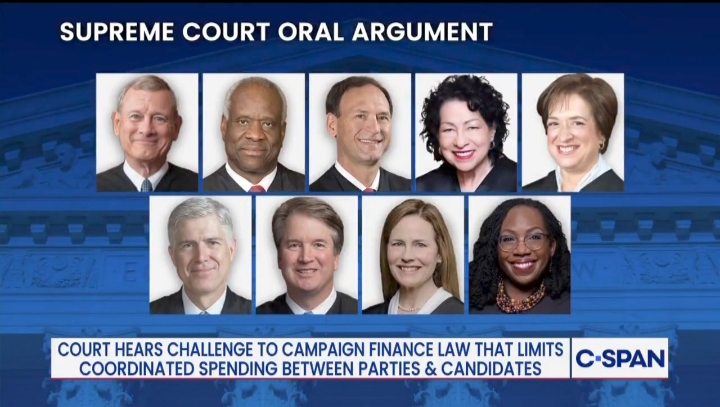
Justice Sotomayor suggests that there was the appearance of a quid pro quo between Donald Trump and Elon Musk during this morning’s Supreme Court oral arguments. And the disturbing implication behind her words — the part she hinted at but didn’t say outright — is what has the entire country scrambling to find out what really happened behind the scenes.
The hearing centered on Trump v. Slaughter, a landmark case with the potential to reshape how much sway a U.S. president can exert over independent federal agencies. At its core is the fate of Federal Trade Commission (FTC) commissioner Rebecca Kelly Slaughter — fired earlier this year by the president, without cause, even though a 1914 law and nearly a century of precedent suggested such removals require defined reasons like “inefficiency, neglect of duty, or malfeasance.”
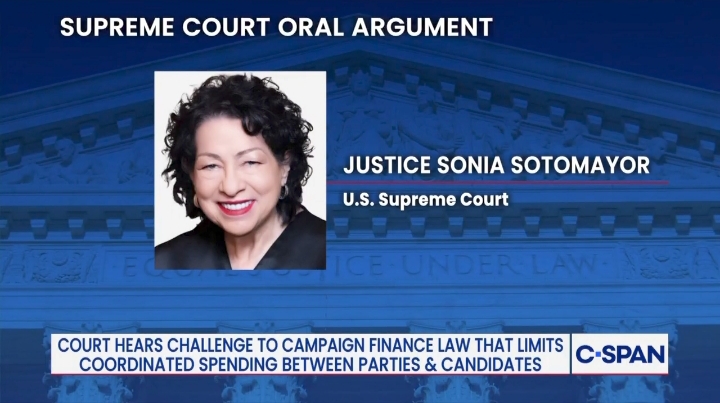
What began as a legal dispute seemed headed toward a historic decision on executive power — until the courtroom turned. Normally the realm of dry legal debate, the chamber crackled when Justice Sotomayor framed a line of questioning that resonated not just as constitutional concern but as a suggestion of influence, money, and shadowy dealings. By invoking the concept of a quid pro quo, she introduced the possibility, not of a proven crime, but of an appearance of a deal — a deal between the president and a powerful donor, long in the spotlight for backing him and close ties to high-stakes politics. That hint, that this could be more than legal precedent, electrified the room.
Across the bench, the Court’s conservative majority seemed primed to side with the administration’s position, signaling a willingness to overturn the 1935 decision Humphrey’s Executor v. United States — the very case that enshrined protections for agency independence. But Sotomayor’s words reframed the debate. No longer was this just about legal doctrine or separation of powers. It was now — at least in the public’s mind — about fairness, influence, accountability, and the possibility that major donors might wield outsized sway over decisions that shape the nation.
The stakes suddenly exceeded the courtroom. A ruling in favor of the administration could allow presidents to purge and repopulate independent agencies with loyalists — effectively dismantling long-standing safeguards designed to keep certain aspects of government beyond partisan reach. And more troubling to many: the blurred line between legitimate governance and power broker politics, especially when mighty names and vast fortunes are involved.
There’s still no evidence of a formal deal, no smoking-gun memo, no hard proof of a bargain. But when institutions meant to be impartial are caught in the crosshairs of politics — when the suggestion of exchange hangs over a case this consequential — the perception alone can be corrosive. For many citizens, confidence in impartial governance begins to crack.
That’s why today’s Supreme Court hearing — and the implications of Sotomayor’s question — will be talked about long after the gavel drops. The decision itself — expected by mid-2026 — might settle the technical question of removal power. But the deeper question remains: what kind of trust, transparency, and accountability will survive if the executive’s reach deepens — and who stands to gain behind closed doors?
Because right now, more than ever, the Court isn’t only weighing the law. It’s weighing the integrity of institutions — and perhaps, the future of American democracy itself.

10 MINUTES AGO: Washington in Panic as President Donald Trump Shot Again While Exiting the White House and Urgently Rushed to the Hospital – Is This a Stunt to Distract from the Epstein Files? Here Are the Full Details

Furious Rep Melanie Stansbury Takes a Bold Move against Trump and his Associates in the Epstein Files after her recent interview, but she might not be safe after this move

BREAKING: Bad Bunny Files Stunning $500 Million Lawsuit Against Donald Trump, Claiming The President’s Super Bowl LX Halftime Remarks Were Made With “Actual Malice” and it’s Causing Severe Reputation Damage

Travis Kelce and Taylor Swift Turn Heads After Appearing at NFL Honors, and Fans Can’t Stop Talking About Taylor’s Unusually Elegant Silver Mini Dress… See Photos

Travis Kelce admitted to cheating on fiance Taylor Swift’s because…

Taylor Swift calls off engagement and wedding plans with Ex Travis Kelce and reveals one shocking reason why

“Why am I being dragged into this?”: Travis Kelce frustrated as Taylor Swift parents stops him from getting married to their daughter because of Austin

“Travis Has Crossed the Line” — Taylor Swift Breaks Her Silence and Reveals What Travis Kelce Did That She Says She Will Never Forgive

Taylor Swift Announces Her Mom and Dad Are Divorcing, Then Says “Travis and I Are No…” — Full Details

Taylor Swift Secretly Bought the Kansas City Chiefs for $14 Billion — Sources Say She Did It to “Protect Travis’s Legacy”

JUST IN: House Democrats are said to be only five votes short of moving forward with Trump’s impeachment, as political pressure rises and a single vote could shift the outcome in Washington.
