
NEWS
JUST IN: China’s President Xi Jinping told President Trump to stop trampling other nations’ sovereignty, condemning U.S. interventions as threats to global stability

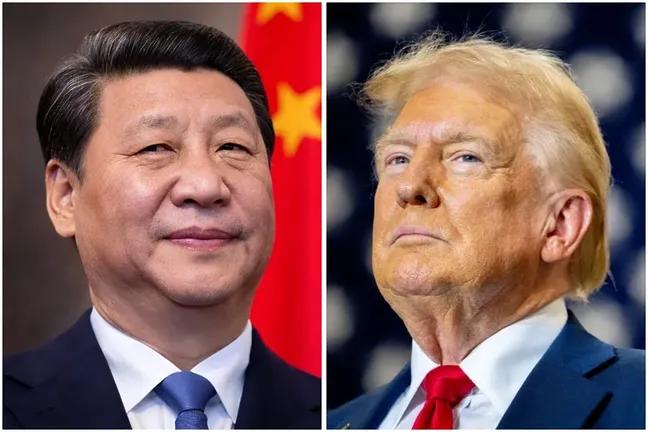
In a striking and unusually direct diplomatic statement, Chinese President Xi Jinping addressed U.S. President Donald Trump, calling on him to respect the sovereignty of other nations.
Xi’s comments, delivered during a high-level bilateral discussion, marked one of the clearest criticisms of American foreign policy in recent years, framing U.S. interventions abroad as destabilizing forces in global politics.
According to sources close to the meeting, Xi emphasized that repeated interference in the domestic affairs of other countries threatens international stability and undermines trust between nations. “Sovereignty is not negotiable,” Xi reportedly said. “Every nation has the right to chart its own course without external coercion. Actions that ignore this principle put global peace at risk.”
The timing of Xi’s statement comes amid growing tensions between China and the United States over trade, military presence in the Asia-Pacific, and U.S. support for certain geopolitical allies. Analysts suggest that China is attempting to assert a more influential role on the world stage, signaling that it will actively challenge policies it views as aggressive or unilateral.
Trump, known for his unconventional approach to foreign diplomacy, reportedly defended America’s actions as necessary for national security and the protection of democratic values.
Officials noted that the exchange was tense but remained formal, with neither side resorting to overtly inflammatory language.
Global reaction to Xi’s remarks has been swift. Experts warn that such a direct rebuke could complicate future negotiations between the world’s two largest economies. “This is more than rhetoric; it’s a clear signal that China intends to push back against what it sees as U.S. overreach,” said Dr. Linda Martinez, a senior fellow at the Global Policy Institute.
The statement also raises questions about how other nations will respond to perceived U.S. interventions. With multiple regions already sensitive to foreign influence, Xi’s comments may embolden other governments to resist U.S. involvement, potentially reshaping alliances and international dynamics.
While diplomatic channels remain open, observers suggest that the confrontation highlights the widening ideological gap between Washington and Beijing.
As both nations prepare for ongoing negotiations on trade, security, and international governance, the world will be watching closely to see whether these tensions escalate—or if compromise can be found.
For now, Xi Jinping’s warning stands as a rare and public admonition, reminding the United States that its global actions are under intense scrutiny and that sovereignty, in today’s volatile international climate, remains a red line for many nations.





10 MINUTES AGO: Washington in Panic as President Donald Trump Shot Again While Exiting the White House and Urgently Rushed to the Hospital – Is This a Stunt to Distract from the Epstein Files? Here Are the Full Details

Furious Rep Melanie Stansbury Takes a Bold Move against Trump and his Associates in the Epstein Files after her recent interview, but she might not be safe after this move

BREAKING: Bad Bunny Files Stunning $500 Million Lawsuit Against Donald Trump, Claiming The President’s Super Bowl LX Halftime Remarks Were Made With “Actual Malice” and it’s Causing Severe Reputation Damage

Travis Kelce and Taylor Swift Turn Heads After Appearing at NFL Honors, and Fans Can’t Stop Talking About Taylor’s Unusually Elegant Silver Mini Dress… See Photos

Travis Kelce admitted to cheating on fiance Taylor Swift’s because…

Taylor Swift calls off engagement and wedding plans with Ex Travis Kelce and reveals one shocking reason why

“Why am I being dragged into this?”: Travis Kelce frustrated as Taylor Swift parents stops him from getting married to their daughter because of Austin

“Travis Has Crossed the Line” — Taylor Swift Breaks Her Silence and Reveals What Travis Kelce Did That She Says She Will Never Forgive

Taylor Swift Announces Her Mom and Dad Are Divorcing, Then Says “Travis and I Are No…” — Full Details

Taylor Swift Secretly Bought the Kansas City Chiefs for $14 Billion — Sources Say She Did It to “Protect Travis’s Legacy”

JUST IN: House Democrats are said to be only five votes short of moving forward with Trump’s impeachment, as political pressure rises and a single vote could shift the outcome in Washington.
