
NEWS
BREAKING: Divorces, Family Betrayals, and Gen Z Turning on Their Own ICE Agent Fathers – as Trump Threatens the Insurrection Act, America Edges Toward a Breaking Point


Minnesota is rapidly becoming the epicenter of a political and cultural firestorm that is now spilling out of protest spaces and into homes, courtrooms, and families themselves. What began as backlash against federal immigration enforcement has escalated into something far more personal, emotional, and volatile, pulling spouses, parents, and children into a conflict that shows no sign of slowing down.
At the center of the controversy is a Minnesota-based law firm that has announced it will provide free legal services to women who choose to divorce their husbands after discovering they joined Immigration and Customs Enforcement. The firm says it is responding to an overwhelming number of inquiries from women who feel blindsided, unsafe, or morally conflicted by their spouse’s involvement with the agency. Supporters frame the move as an act of empowerment and accountability, while critics argue it dangerously politicizes marriage and turns personal relationships into ideological battlegrounds.
As that debate rages, a new activist group calling itself “Moms Against ICE” has entered the scene, pushing the conflict into even more emotionally charged territory. The group is reportedly recruiting the mothers of ICE agents, offering to cover travel costs so they can come to Minneapolis and publicly denounce their sons. Organizers say the goal is to force agents to confront the human consequences of their work by hearing directly from the women who raised them. Opponents call it manipulative and cruel, accusing the group of exploiting family bonds to score political points.
But it is the next development that has truly stunned observers and set social media ablaze. Across TikTok and other platforms, Gen Z teens are allegedly exposing their own fathers as ICE agents, posting names, photos, and identifying details in viral videos that frame the actions as moral resistance. Many of the posts carry defiant language, with creators insisting their generation will not stay silent or compliant. To them, this is not betrayal, but activism.

The consequences, however, have been swift and severe. Reports indicate that multiple teens involved in these posts have been kicked out of their homes, accused of endangering their families and crossing legal lines. What was once a political disagreement has now fractured households, leaving parents and children on opposite sides of a conflict neither seems willing to abandon. Legal experts warn that while the teens may see themselves as whistleblowers, exposing personal information can carry serious legal risks, regardless of intent.
As these family implosions play out online, the situation on the ground in Minnesota continues to deteriorate. Protests have grown larger and more confrontational, with clashes between demonstrators and law enforcement increasing in frequency. City officials have acknowledged mounting pressure, while state authorities say they are monitoring the situation closely as rhetoric hardens and emotions run hotter by the day.

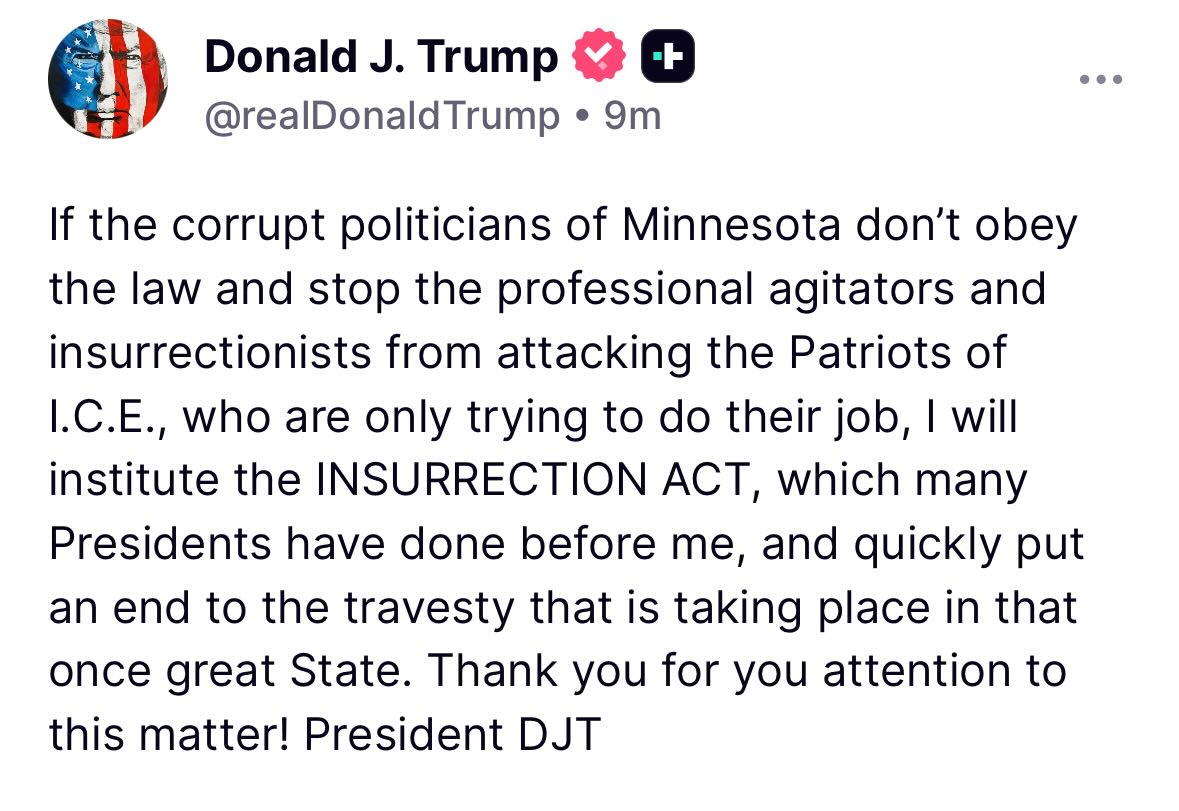
Into this chaos steps Donald Trump, who has now openly threatened to invoke the Insurrection Act in Minnesota. The move would allow for the deployment of federal forces under the justification of restoring order, a prospect that has immediately alarmed civil liberties advocates and energized both supporters and opponents. To Trump’s allies, it is a show of strength and lawfulness. To critics, it is an explosive escalation that could pour gasoline on an already raging fire.
What makes the moment especially dangerous is the way every layer of society is now involved. This is no longer just a dispute between activists and federal agencies. It is unfolding inside marriages, between parents and children, and across generational lines. Each new development seems to push the conflict closer to a breaking point, with trust eroding not only in institutions, but within families themselves.
And according to sources watching the situation closely, the public threats and viral moments may be only part of the story. Behind closed doors, discussions are reportedly underway that could reshape how far federal authority is willing to go, how states respond, and what happens when political warfare fully enters the private lives of Americans.
As Minnesota braces for what comes next, one question now looms over everything: is this the peak of the crisis — or merely the moment before it explodes into something the country has never seen before?









10 MINUTES AGO: Washington in Panic as President Donald Trump Shot Again While Exiting the White House and Urgently Rushed to the Hospital – Is This a Stunt to Distract from the Epstein Files? Here Are the Full Details

Furious Rep Melanie Stansbury Takes a Bold Move against Trump and his Associates in the Epstein Files after her recent interview, but she might not be safe after this move

BREAKING: Bad Bunny Files Stunning $500 Million Lawsuit Against Donald Trump, Claiming The President’s Super Bowl LX Halftime Remarks Were Made With “Actual Malice” and it’s Causing Severe Reputation Damage

Travis Kelce and Taylor Swift Turn Heads After Appearing at NFL Honors, and Fans Can’t Stop Talking About Taylor’s Unusually Elegant Silver Mini Dress… See Photos

Travis Kelce admitted to cheating on fiance Taylor Swift’s because…

Taylor Swift calls off engagement and wedding plans with Ex Travis Kelce and reveals one shocking reason why

“Why am I being dragged into this?”: Travis Kelce frustrated as Taylor Swift parents stops him from getting married to their daughter because of Austin

“Travis Has Crossed the Line” — Taylor Swift Breaks Her Silence and Reveals What Travis Kelce Did That She Says She Will Never Forgive

Taylor Swift Announces Her Mom and Dad Are Divorcing, Then Says “Travis and I Are No…” — Full Details

Taylor Swift Secretly Bought the Kansas City Chiefs for $14 Billion — Sources Say She Did It to “Protect Travis’s Legacy”

JUST IN: House Democrats are said to be only five votes short of moving forward with Trump’s impeachment, as political pressure rises and a single vote could shift the outcome in Washington.
