
NEWS
A Fired White House Doctor Is Finally Speaking, and What He’s Saying About Trump’s Health Is Setting Off Alarms

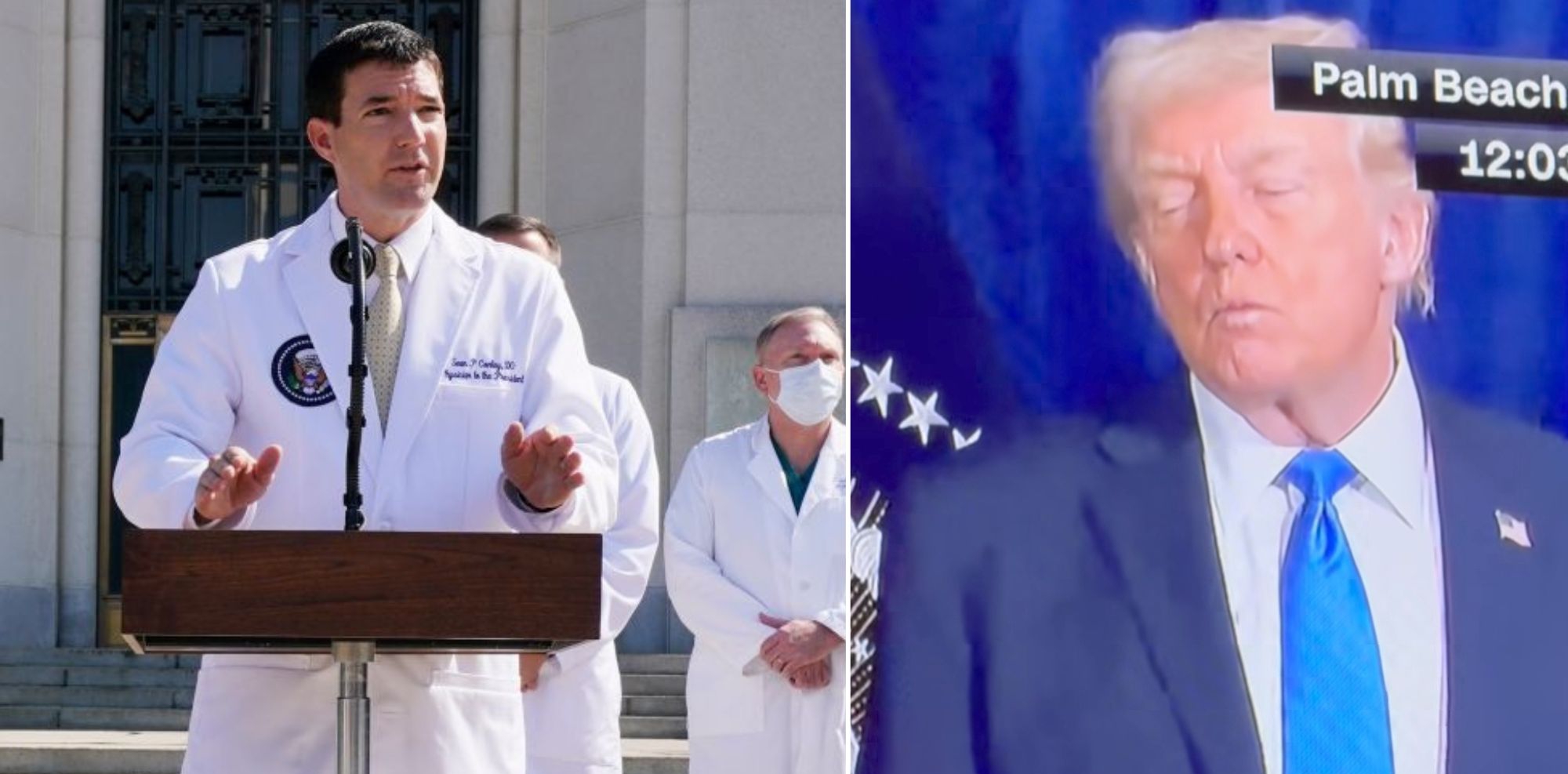
For years, Donald Trump’s health has been wrapped in bravado, half-smiles, and carefully worded statements meant to project strength rather than truth.
The public was told he was “in perfect condition,” that his energy levels were unmatched, and that concerns about fatigue or cognitive decline were nothing more than political attacks.
But according to a former White House doctor who says he was fired after refusing to keep up the charade, that story is now collapsing in real time.
The doctor, who once had direct access to Trump’s medical records and daily physical condition, claims the moment he pushed back against continuing to soften or reframe troubling findings, his days in Trump’s orbit were numbered.
He says there was constant pressure to downplay visible symptoms, rebrand medical concerns as quirks, and convert red flags into jokes that supporters would dismiss as media hysteria. Eventually, refusing to “massage the truth” became a liability.
That context is what makes Trump’s recent Wall Street Journal interview so explosive. Viewers noticed something unsettling almost immediately. Trump appeared to be drifting in and out of awareness, at one point seemingly asleep while still upright.
When questioned about reports that he had been falling asleep during meetings, Trump brushed it off with a familiar line, insisting he wasn’t nodding off at all, just “resting his eyes.” The doctor calls that explanation a classic deflection, one he says is often used when physical exhaustion or neurological strain becomes difficult to hide.
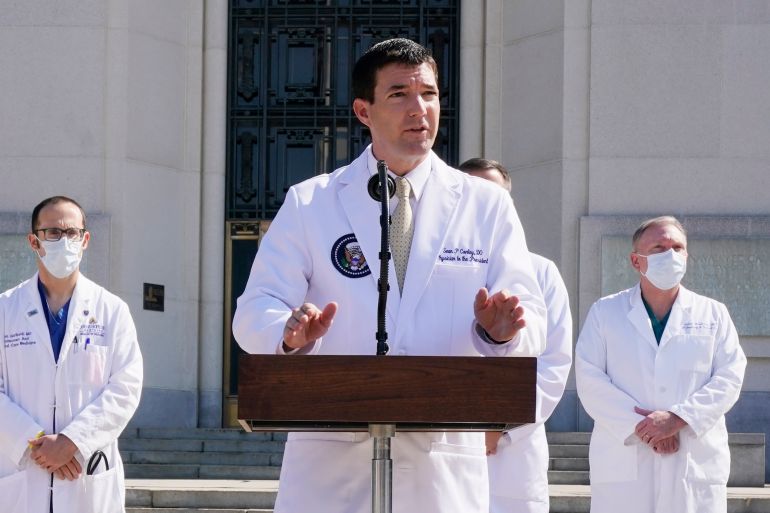
Then there was the bruising. Viewers spotted discoloration that Trump hurried to explain away as the result of heavy aspirin use, even framing it as a kind of superstition, something he suggested was harmless and routine.
The doctor disagrees. He argues that visible bruising, especially when paired with fatigue and slowed responsiveness, should never be casually dismissed, particularly in someone under intense stress and advanced age. According to him, aspirin alone does not tell the full story.
What stands out most to the doctor is Trump’s sudden willingness to talk about his health at all. For years, details were sparse, selective, and tightly controlled.
Now, Trump appears eager to get ahead of the conversation, offering explanations before critics can define the narrative. The doctor believes this shift isn’t transparency at all, but damage control. In his view, Trump’s team understands that stories about cognitive decline, stamina issues, and physical instability are becoming harder to suppress, even among friendly media.
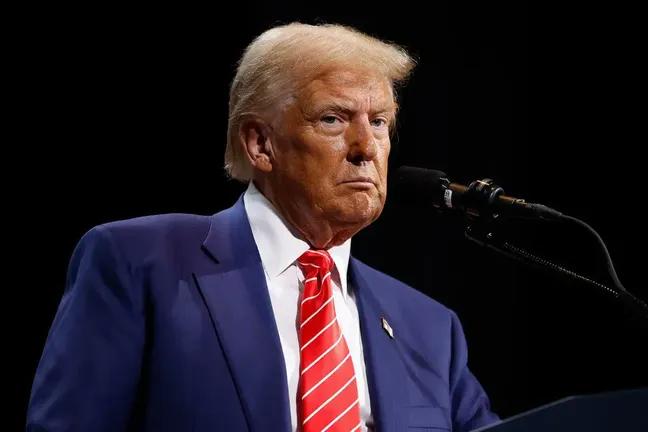
Behind the scenes, the doctor claims, concerns have been quietly piling up. He describes a pattern of symptoms that, taken individually, might be brushed off, but together paint a more serious picture.
He says there is one diagnosis in particular that he considers the most urgent, something he believes should have triggered far more caution than it did. Beyond that, he alleges there are at least ten additional health findings that were repeatedly minimized, reframed, or outright ignored to preserve Trump’s public image.
The reaction from the public has been visceral. Social media has latched onto every frame, every still image, every awkward pause. Some reactions border on mockery, while others reflect genuine unease. One detail, oddly enough, has become a fixation: Trump’s neck.
Viewers have openly begged for it to be pixelated in broadcasts, saying its appearance only adds to the growing sense that something is deeply off. It’s an unusual demand, but it speaks to how intensely people are scrutinizing every visible sign.
The doctor insists this isn’t about politics. He says his concern is simple: the gap between what the public has been told and what he believes is actually happening is growing wider by the day. He argues that pretending everything is fine does not make underlying problems disappear, and that time has a way of exposing what spin cannot permanently hide.
Perhaps the most chilling claim is about the future. Based on what he says he observed and documented, the doctor believes Trump’s health trajectory raises serious questions about endurance, resilience, and longevity. He stops short of offering a timeline, but he does not shy away from saying that, in his professional opinion, the idea of Trump comfortably making it past 2026 should not be taken for granted.
For supporters, these claims will likely be dismissed as betrayal or exaggeration. For critics, they confirm long-held suspicions. But for everyone else watching closely, the situation raises an uncomfortable question: if the truth about Trump’s health has been managed this aggressively before, what else might still be waiting to surface? And as more insiders decide they have less to lose by speaking out, this may only be the beginning of a much larger reckoning.









10 MINUTES AGO: Washington in Panic as President Donald Trump Shot Again While Exiting the White House and Urgently Rushed to the Hospital – Is This a Stunt to Distract from the Epstein Files? Here Are the Full Details

Furious Rep Melanie Stansbury Takes a Bold Move against Trump and his Associates in the Epstein Files after her recent interview, but she might not be safe after this move

BREAKING: Bad Bunny Files Stunning $500 Million Lawsuit Against Donald Trump, Claiming The President’s Super Bowl LX Halftime Remarks Were Made With “Actual Malice” and it’s Causing Severe Reputation Damage

Travis Kelce and Taylor Swift Turn Heads After Appearing at NFL Honors, and Fans Can’t Stop Talking About Taylor’s Unusually Elegant Silver Mini Dress… See Photos

Travis Kelce admitted to cheating on fiance Taylor Swift’s because…

Taylor Swift calls off engagement and wedding plans with Ex Travis Kelce and reveals one shocking reason why

“Why am I being dragged into this?”: Travis Kelce frustrated as Taylor Swift parents stops him from getting married to their daughter because of Austin

“Travis Has Crossed the Line” — Taylor Swift Breaks Her Silence and Reveals What Travis Kelce Did That She Says She Will Never Forgive

Taylor Swift Announces Her Mom and Dad Are Divorcing, Then Says “Travis and I Are No…” — Full Details

Taylor Swift Secretly Bought the Kansas City Chiefs for $14 Billion — Sources Say She Did It to “Protect Travis’s Legacy”

JUST IN: House Democrats are said to be only five votes short of moving forward with Trump’s impeachment, as political pressure rises and a single vote could shift the outcome in Washington.
