
NEWS
BBC News reported: Gavin Newsom has given President Trump 24 hours to have GOP-led states “stand down” on restrictions before 2026 or California will gerrymander several blue seats

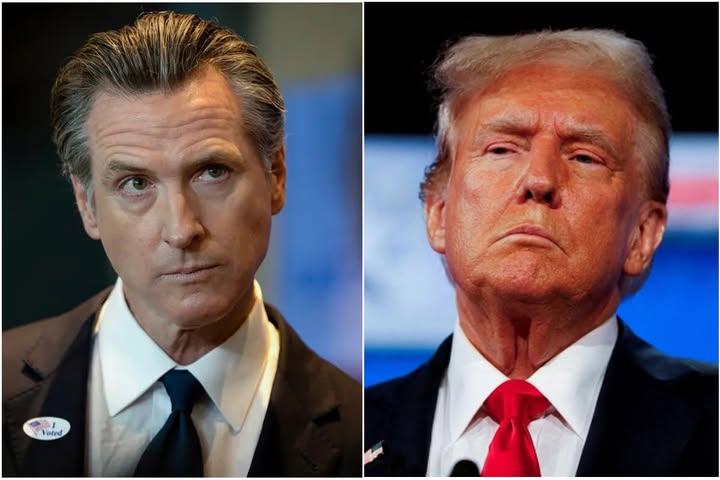
BBC News dropped a political shockwave when it reported that California Governor Gavin Newsom had issued a stark 24-hour ultimatum to President Trump.
The message was blunt and unusually aggressive by modern standards: either GOP-led states “stand down” on certain election-related restrictions ahead of 2026, or California will respond by aggressively gerrymandering several solidly blue congressional seats.
What made the warning even more explosive was Newsom’s promise of a “major announcement” later this week if Trump refuses to comply, a phrase that instantly set off alarms across Washington.
At first glance, the move sounded like political brinkmanship, but insiders say it reflects something deeper: a growing belief among Democratic leaders that the traditional rules of restraint are no longer working.
For years, Democrats have accused Republican-controlled states of using redistricting, voting laws, and procedural tactics to lock in power well ahead of the 2026 midterms.
Newsom’s threat appears to flip that logic on its head, signaling that California is now willing to use the same hardball methods—openly and unapologetically.
The timing is not accidental. With Trump dominating the Republican landscape once again and GOP lawmakers in several states advancing new voting restrictions, pressure has been building inside the Democratic Party to stop “playing defense.” Newsom, long rumored to have national ambitions, is positioning himself as the face of a more confrontational Democratic strategy, one that treats power as something to be defended aggressively rather than politely negotiated.
What startled even seasoned observers was the explicit nature of the threat. Gerrymandering has always existed in American politics, but leaders typically speak around it, not directly at it.
By openly naming it as a retaliatory tool, Newsom shattered a long-standing political taboo. Allies privately argue that transparency is the point: if Republicans are willing to redraw maps to their advantage, Democrats should stop pretending unilateral restraint is a virtue.
Inside Republican circles, the reaction has ranged from outrage to disbelief. Some GOP strategists accuse Newsom of attempting to strong-arm the federal government and destabilize the electoral system. Others warn that if California follows through, it could trigger a chain reaction, with multiple blue states adopting similarly aggressive tactics, effectively igniting a nationwide redistricting arms race ahead of 2026.
The White House has remained cautious, offering no immediate response as the 24-hour clock ticks down.
That silence, however, has only intensified speculation. Political watchers note that Trump thrives on public confrontation, yet this time the threat is structural, not rhetorical.
It’s not about headlines or rallies, but about reshaping the electoral battlefield itself.
Behind the scenes, legal experts are already debating how far California could realistically go and whether such a move would survive court challenges.
But even critics admit that the mere announcement could shift negotiations, pressure GOP governors, and force federal officials into uncomfortable conversations they’ve avoided for years.
Supporters of Newsom’s stance argue that this is exactly the shock the system needs.
They believe Republicans will only retreat if faced with equal consequences, not moral appeals. Detractors counter that normalizing open threats of gerrymandering risks eroding public trust even further in an already fragile democratic process.
What no one disputes is that the stakes are enormous. The 2026 midterms could determine control of Congress, shape the remainder of Trump’s political future, and influence the direction of U.S. democracy for a generation. By tying California’s redistricting power directly to federal and state-level actions elsewhere, Newsom has raised the cost of inaction—and made himself impossible to ignore.
As the deadline approaches, tension is mounting across political, legal, and media circles. Will Trump call Newsom’s bluff? Will GOP-led states quietly back off to avoid escalation? Or will Newsom step to the podium later this week and unveil a move that permanently alters the balance of power?
Because according to sources close to the situation, what he’s threatening publicly may only be a fraction of what he’s prepared to announce—and once it’s revealed, there may be no way back.










Taylor Swift and Travis Kelce Hold Hands Following Dinner Date Night in N.Y.C.

OMG!! Taylor Swift and Travis Kelce Finally Confirm That… See Full Details

Taylor Swift’s new song “Cleveland!” is a love letter to Travis Kelce… and a message to the haters!

Taylor Swift’s Sweetest Moment Steals the Spotlight as She Cheers for Husband Travis Kelce, Shouts “That’s My Husband,” Then Shares a Heartwarming Hug With Mama and Papa Kelce…See full video ⤵️

Taylor Swift’s Sweetest Postgame Moment Yet as She Runs Straight Into Husband Travis Kelce’s Arms After Chiefs-Colts Clash, Sharing a Hug and Celebrating Together on the Field after dramatic winner where Travis Scored a Touchdown .See full video … “

Kansas City Chiefs Announce They Will Cover Full Funeral Costs for Dillon, Isabella and 2-Year-Old Easton — Three Devoted Chiefs Fans Tragically Killed in Southeast Kansas House Fire 💔🏈 Details in the comment 👇

Taylor Swift Breaks NFL Protocol Again and Rushes to the Field to Celebrate, Hug, and Kiss Husband Travis Kelce After Chiefs’ Stunning 33–30 Overtime Win Over the Colts – Mom Andrea Swift Seen Chasing Her Daughter to Caution Her as Overexcited Taylor Couldn’t Hold Herself Back, While Patrick Mahomes Couldn’t Hold Back His Laughter… See the Full Never-Before-Seen Clip and Photos…

Taylor Swift Reveals Her Mom Is Facing Cancer Again: ‘I Give All of My Worry to Real Problems Now’

Travis Kelce Gives Fans a Glimpse Into His Family Vacation in St. Barts as Wife Taylor Swift Relaxes Under the Tent While He Shows Off His Unexpected Master-Chef Skills During a Fun-Filled Outdoor Cooking Moment..See the videos and photos

OMG!! Taylor Swift and Travis Kelce Finally Confirm That… See Full Details

“Taylor Swift went grocery shopping with Travis Kelce’s mom, Donna, and sister-in-law, Kylie. The pop star is already fitting right in with the family and is also looking like…See 10 Beautiful Photos
