
NEWS
This is Alan Page protesting in Minneapolis yesterday . Alan was a Minnesota Viking, is in the NFL Hall of Fame and is a retired Justice of the Minnesota Supreme Court

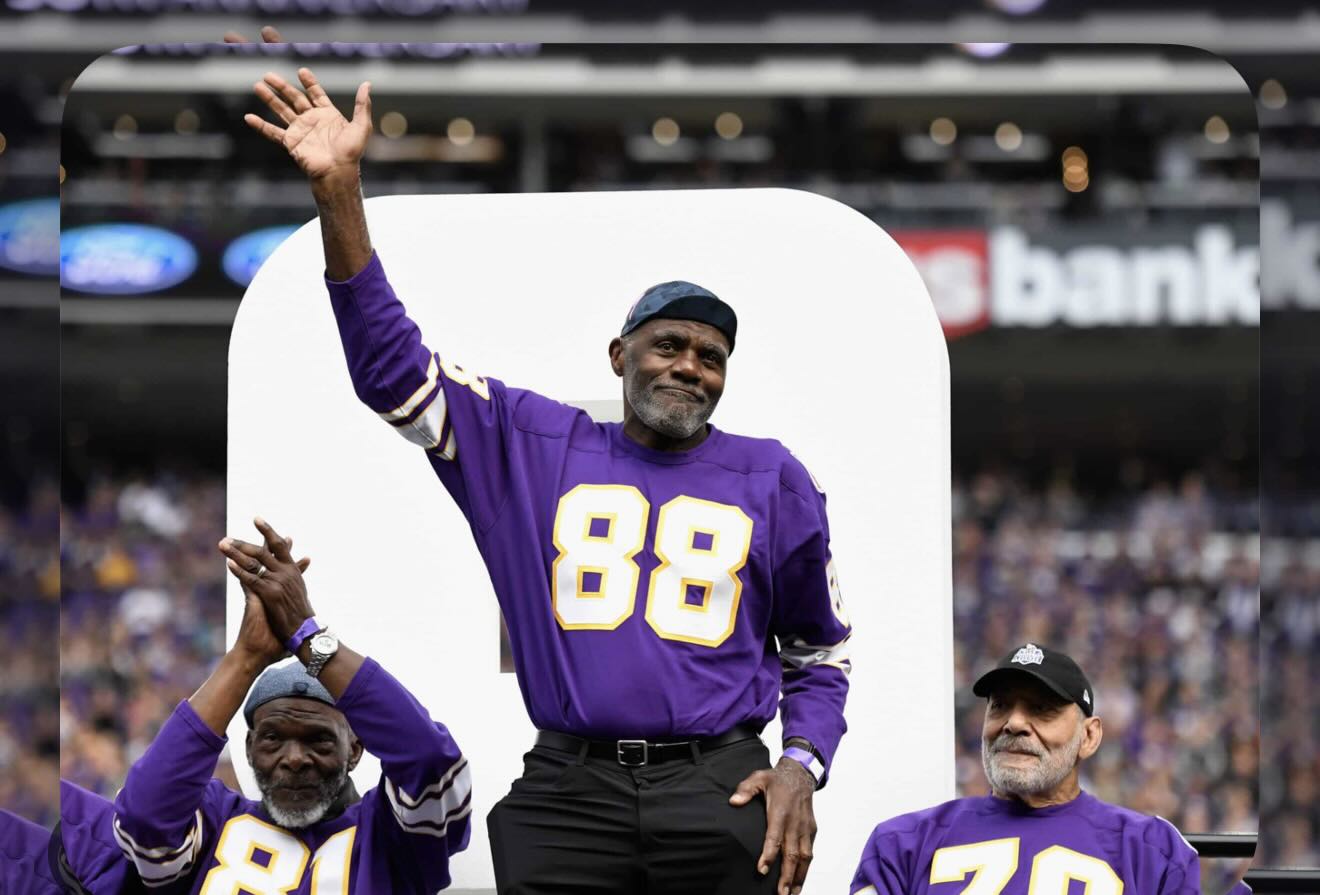
In a moment that quietly but powerfully cut through the noise of modern politics, a familiar figure stood among protesters in Minneapolis yesterday—not for attention, not for applause, but for principle. Alan Page. Former Minnesota Viking. NFL Hall of Famer. Retired Justice of the Minnesota Supreme Court. A man whose résumé alone commands respect, yet who chose to stand shoulder to shoulder with everyday citizens instead of watching history from a distance.
For many who recognized him, the image was striking. Page is not just a sports legend or a legal icon; he is a living symbol of discipline, integrity, and lifelong public service. Seeing him protest was a reminder that leadership does not retire, and conscience does not fade with age or achievement.
Alan Page’s life story already reads like something out of a history book. On the football field, he was relentless, intelligent, and revolutionary. As a defensive tackle for the Minnesota Vikings, he helped redefine the position, earning league MVP honors and a permanent place in the Pro Football Hall of Fame. He played the game with intensity, but also with a sense of purpose that extended far beyond wins and losses.
Yet what makes Page truly unique is what he did after football. While many athletes settle into comfort or celebrity, Page chose a different path. He earned a law degree, entered public service, and eventually became a Justice of the Minnesota Supreme Court. In that role, he dedicated himself to fairness, education, and equal opportunity, especially for children. Long before protests and public debates became constant fixtures in American life, Page was already working quietly to strengthen the foundations of justice.
That history is what made yesterday’s moment so powerful. This was not a celebrity dropping in for a photo op. This was not a retired athlete reliving past relevance. This was a man who has spent his entire life standing up for values—showing up again, simply because he believes it still matters.

In an era where public discourse is often dominated by outrage, performative activism, and social media slogans, Alan Page’s presence sent a different message. It said that protest is not about noise alone; it is about commitment. It is about showing up even when you don’t have to, even when you’ve already earned every honor society can offer.
There is something deeply grounding about seeing a figure like Page take part in civic action. It bridges generations. Younger protesters see proof that the fight for justice did not begin with them—and older generations are reminded that engagement does not end with retirement. Page represents continuity: the idea that progress is not a trend, but a responsibility passed from one generation to the next.
His appearance also challenges a common narrative—that successful people should stay quiet, stay neutral, and stay comfortable. Alan Page has never lived that way. From the football field to the courtroom to the streets of Minneapolis, he has consistently acted on the belief that status is meaningless if it is not used in service of something larger.
Respect, in this case, is not just about who he is, but about what he chose to do. He did not need to protest to prove anything. His legacy is already secure. And yet, he stood there anyway, reminding everyone watching that democracy is not a spectator sport.
Moments like this rarely dominate headlines for long, but they linger in memory. Long after arguments fade and news cycles move on, people will remember that Alan Page showed up. Quietly. Steadily. With the same dignity that defined his career in sports and in law.
In a time when cynicism comes easily, his presence offered something rare: credibility. And that is why, regardless of where one stands politically, the reaction was nearly universal.
Respect.

Taylor Swift Reveals Her Mom Is Facing Cancer Again: ‘I Give All of My Worry to Real Problems Now’

Travis Kelce Gives Fans a Glimpse Into His Family Vacation in St. Barts as Wife Taylor Swift Relaxes Under the Tent While He Shows Off His Unexpected Master-Chef Skills During a Fun-Filled Outdoor Cooking Moment..See the videos and photos

OMG!! Taylor Swift and Travis Kelce Finally Confirm That… See Full Details

“Taylor Swift went grocery shopping with Travis Kelce’s mom, Donna, and sister-in-law, Kylie. The pop star is already fitting right in with the family and is also looking like…See 10 Beautiful Photos

Taylor Swift and Travis Kelce Melt Hearts With a Sweet Garden Embrace and Playful Barefoot Dance, Giving Fans a Rare Glimpse Into Their Fun-Filled, Romantic Married Life as They Unwind Together Before the Kansas City Chiefs’ Big Game

TAYLOR SWIFT AND TRAVIS KELCE’S QUIET POST-GAME MOMENT MELTS HEARTS! After the NFL Game, the Couple Retreats to a Peaceful Private Setting, Sharing a Tender Kiss and Sweet Glances Through the Window as They Simply Enjoy Being Close to Each Other..

Looks Like His Wife Dresses Him’ — Fans Sense Taylor Swift in Travis Kelce’s Stylish Outfit for Chiefs Preseason Game 1

Taylor Swift and Brittany Mahomes plan to surprise their husbands and to support their game tonight…

NO LONGER THE RUMOR: Just one hour ago, Travis Kelce dropped the long-awaited announcement we’ve all been hoping for…

Travis Kelce flashes his wedding ring as he arrives for first Chiefs game tonight since marrying Taylor Swift… but his new wife is not spotted in the stands…

Travis Kelce Spotted on a Stroll With Wife Taylor Swift and a Baby Bump Just Weeks After Their Wedding, and Fans Are All Saying the Same Thing… See the Photos
