
NEWS
BREAKING: German politician Jürgen Hardt has proposed a boycott of the 2026 World Cup in the United States, citing concerns over Greenland and the safety of visitors amid ICE actions, saying FIFA should pull the World Cup from the U.S

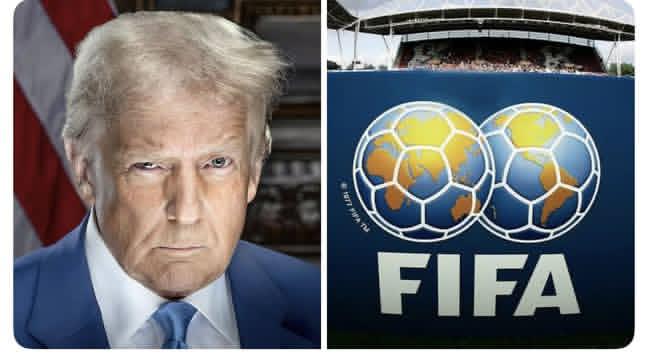
The controversy surrounding the 2026 World Cup took a sharp international turn after German politician Jürgen Hardt publicly suggested that the tournament should be boycotted if it remains hosted in the United States.
His comments, which quickly spread across European and American media circles, have reignited a broader debate about politics, safety, and whether global sporting events can truly remain separate from government policy. What was initially expected to be a celebration of unity through football is now facing questions that go far beyond the pitch.
At the center of Hardt’s remarks are concerns about Greenland and the treatment and safety of international visitors entering the United States, particularly in relation to Immigration and Customs Enforcement, commonly known as ICE.
According to Hardt, the current political climate sends troubling signals to fans, athletes, and officials who would travel from all over the world to attend the World Cup. In his view, FIFA has a responsibility not just to organize matches and sell broadcasting rights, but to ensure that host nations provide an environment where visitors feel welcome and secure regardless of nationality.
The 2026 World Cup is already historic for several reasons.
It will be the first tournament hosted across three countries—the United States, Canada, and Mexico—and the first to feature an expanded field of 48 teams.
FIFA has promoted it as a symbol of global cooperation, cultural exchange, and the unifying power of sport. That narrative, however, is now being challenged by voices like Hardt’s, who argue that symbolism means little if real-world policies undermine the safety and dignity of those attending.
Hardt’s reference to Greenland adds another layer of complexity.
Greenland has long been a sensitive geopolitical topic, and any perceived pressure, threats, or political maneuvering involving the territory tend to provoke strong reactions in Europe.
For critics, linking Greenland-related tensions with the World Cup underscores a belief that the United States is projecting power in ways that make international partners uneasy. While supporters of the U.S. hosting role dismiss this as an overreach, the fact that such arguments are being raised at all highlights how politicized the tournament has become years before kickoff.
The issue of ICE has proven even more combustible. Over the past several years, immigration enforcement in the United States has been a flashpoint for controversy, with reports of aggressive tactics, detentions, and heightened scrutiny at borders. For millions of football fans, the idea of traveling thousands of miles only to face fear or uncertainty at entry points is deeply unsettling.
Hardt’s warning taps into those anxieties, suggesting that the World Cup should not be staged in a country where visitors might worry about being questioned, detained, or treated unfairly because of their background.
FIFA now finds itself in an uncomfortable position.
On one hand, it has repeatedly insisted that football should remain apolitical, emphasizing that the World Cup is about sport, culture, and global celebration. On the other hand, the organization has faced growing pressure in recent years to consider human rights, safety, and political stability when awarding and maintaining hosting rights.
Past tournaments have shown that ignoring these concerns can lead to lasting reputational damage.
Reactions to Hardt’s proposal have been sharply divided. Supporters argue that a boycott threat is a legitimate way to push for accountability and change, especially when soft diplomacy appears ineffective.
They claim that global events like the World Cup carry enormous symbolic weight and economic impact, making them powerful leverage points for addressing international concerns.
Critics, however, accuse Hardt of politicizing sport and unfairly targeting the United States, noting that millions of international visitors travel to the country every year without incident.
In the United States, responses have ranged from dismissal to defiance. Some officials and commentators argue that the country is fully capable of hosting a safe, successful World Cup and that the concerns being raised are exaggerated or politically motivated.
Others, more cautiously, acknowledge that perception matters just as much as reality, and that even isolated incidents involving visitors could have outsized consequences during a global event watched by billions.
As the debate intensifies, one thing is clear: the 2026 World Cup is no longer just a sporting event on the calendar. It has become a focal point for broader discussions about national image, immigration policy, and international trust.
Whether FIFA will face sustained pressure to reconsider the hosting arrangement remains uncertain, but the fact that such calls are emerging years in advance suggests that the road to kickoff may be far more turbulent than originally anticipated.
For fans around the world, the hope remains that football will ultimately prevail over politics. Yet Hardt’s remarks serve as a reminder that in today’s interconnected world, no global event exists in a vacuum. The decisions made now—by governments, organizers, and international bodies—may determine whether the 2026 World Cup is remembered as a triumph of unity or as a tournament overshadowed by controversy long before the first whistle blows.










Taylor Swift Reveals Her Mom Is Facing Cancer Again: ‘I Give All of My Worry to Real Problems Now’

Travis Kelce Gives Fans a Glimpse Into His Family Vacation in St. Barts as Wife Taylor Swift Relaxes Under the Tent While He Shows Off His Unexpected Master-Chef Skills During a Fun-Filled Outdoor Cooking Moment..See the videos and photos

OMG!! Taylor Swift and Travis Kelce Finally Confirm That… See Full Details

“Taylor Swift went grocery shopping with Travis Kelce’s mom, Donna, and sister-in-law, Kylie. The pop star is already fitting right in with the family and is also looking like…See 10 Beautiful Photos

Taylor Swift and Travis Kelce Melt Hearts With a Sweet Garden Embrace and Playful Barefoot Dance, Giving Fans a Rare Glimpse Into Their Fun-Filled, Romantic Married Life as They Unwind Together Before the Kansas City Chiefs’ Big Game

TAYLOR SWIFT AND TRAVIS KELCE’S QUIET POST-GAME MOMENT MELTS HEARTS! After the NFL Game, the Couple Retreats to a Peaceful Private Setting, Sharing a Tender Kiss and Sweet Glances Through the Window as They Simply Enjoy Being Close to Each Other..

Looks Like His Wife Dresses Him’ — Fans Sense Taylor Swift in Travis Kelce’s Stylish Outfit for Chiefs Preseason Game 1

Taylor Swift and Brittany Mahomes plan to surprise their husbands and to support their game tonight…

NO LONGER THE RUMOR: Just one hour ago, Travis Kelce dropped the long-awaited announcement we’ve all been hoping for…

Travis Kelce flashes his wedding ring as he arrives for first Chiefs game tonight since marrying Taylor Swift… but his new wife is not spotted in the stands…

Travis Kelce Spotted on a Stroll With Wife Taylor Swift and a Baby Bump Just Weeks After Their Wedding, and Fans Are All Saying the Same Thing… See the Photos
