
NEWS
Poll: Who thinks Donald Trump should be removed from office with the 25th Amendment?

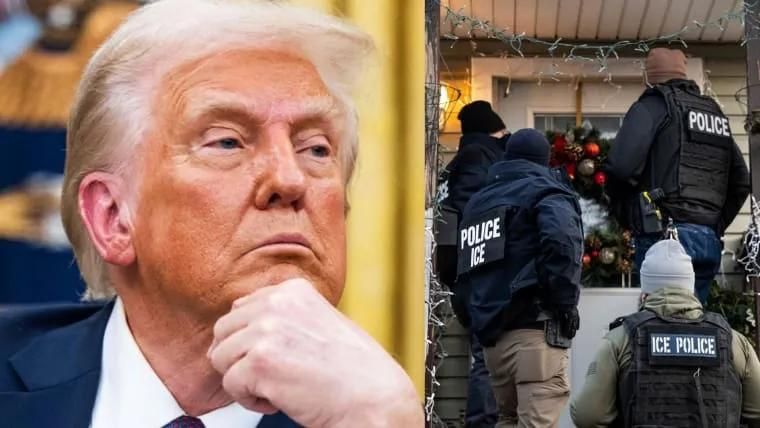
The question is no longer whispered in political circles. It is being asked openly, repeatedly, and with growing urgency across social media, news panels, and dinner tables across the country. Should Donald Trump be removed from office using the 25th Amendment?
Once considered an extreme and nearly unthinkable constitutional measure, the 25th Amendment has suddenly entered everyday conversation. What was designed as a safeguard for moments of true presidential incapacity is now being debated by ordinary Americans who say they are alarmed by what they are witnessing.
A growing number of voters say the issue is not about policy disagreements or party loyalty. They argue it is about stability, judgment, and fitness to lead. In online polls and public forums, Americans are increasingly split, with emotions running high on both sides.
Supporters of invoking the 25th Amendment point to what they describe as erratic behavior, escalating rhetoric, and decisions they believe put the country at risk. They argue that the amendment exists precisely for moments when a president appears unable or unwilling to govern responsibly. To them, using it would not be an act of rebellion, but an act of constitutional duty.
Others see the situation very differently. Trump’s defenders insist that calls for the 25th Amendment are politically motivated and dangerous. They warn that invoking it without clear medical incapacity would weaponize the Constitution and set a precedent that could haunt future presidents. For them, elections, not constitutional mechanisms, are the only legitimate way to remove a leader.
What makes this debate especially intense is that it cuts across familiar political lines. Some lifelong conservatives say they feel torn between supporting their party and protecting democratic norms. Meanwhile, independents and undecided voters say the constant chaos has left them exhausted and fearful about the future.
The 25th Amendment itself adds to the tension. It cannot be triggered by Congress or the courts alone. It requires action from the vice president and a majority of the Cabinet. That reality has led many Americans to ask a deeper question. If those closest to the president do not act, does that mean everything is fine, or does it mean political pressure is silencing concerns?
As speculation grows, so does public frustration. Many voters feel trapped between two unsatisfying options. On one hand, waiting for elections feels too slow for what they perceive as an ongoing crisis. On the other, invoking the 25th Amendment feels like crossing a constitutional line that has rarely been approached.
Online polls capture this unease vividly. Comments are filled with anger, fear, sarcasm, and disbelief. Some voters say they would support immediate action if it meant restoring calm and predictability. Others say they would see such a move as proof that elites are overriding the will of the people.
What is clear is that the conversation itself marks a historic moment. Never before has the idea of removing a president through the 25th Amendment been discussed so widely by the public. Whether one supports Trump or opposes him, the fact that this question is being asked at all speaks to a deep national anxiety.
As the political temperature continues to rise, Americans are left staring at a constitutional tool they once barely understood. Is it a necessary safeguard waiting to be used, or a line that should never be crossed?
The poll question lingers, unanswered but impossible to ignore. Who thinks Donald Trump should be removed using the 25th Amendment, and what does that say about the state of the nation right now?
One thing is certain. This debate is far from over, and the answer may shape the future of American democracy itself.







10 MINUTES AGO: Washington in Panic as President Donald Trump Shot Again While Exiting the White House and Urgently Rushed to the Hospital – Is This a Stunt to Distract from the Epstein Files? Here Are the Full Details

Furious Rep Melanie Stansbury Takes a Bold Move against Trump and his Associates in the Epstein Files after her recent interview, but she might not be safe after this move

BREAKING: Bad Bunny Files Stunning $500 Million Lawsuit Against Donald Trump, Claiming The President’s Super Bowl LX Halftime Remarks Were Made With “Actual Malice” and it’s Causing Severe Reputation Damage

Travis Kelce and Taylor Swift Turn Heads After Appearing at NFL Honors, and Fans Can’t Stop Talking About Taylor’s Unusually Elegant Silver Mini Dress… See Photos

Travis Kelce admitted to cheating on fiance Taylor Swift’s because…

Taylor Swift calls off engagement and wedding plans with Ex Travis Kelce and reveals one shocking reason why

“Why am I being dragged into this?”: Travis Kelce frustrated as Taylor Swift parents stops him from getting married to their daughter because of Austin

“Travis Has Crossed the Line” — Taylor Swift Breaks Her Silence and Reveals What Travis Kelce Did That She Says She Will Never Forgive

Taylor Swift Announces Her Mom and Dad Are Divorcing, Then Says “Travis and I Are No…” — Full Details

Taylor Swift Secretly Bought the Kansas City Chiefs for $14 Billion — Sources Say She Did It to “Protect Travis’s Legacy”

JUST IN: House Democrats are said to be only five votes short of moving forward with Trump’s impeachment, as political pressure rises and a single vote could shift the outcome in Washington.
