
NEWS
ICE Showed Up at Our House Again – Five Cars, One Baby, and a City That Refuses to Cower

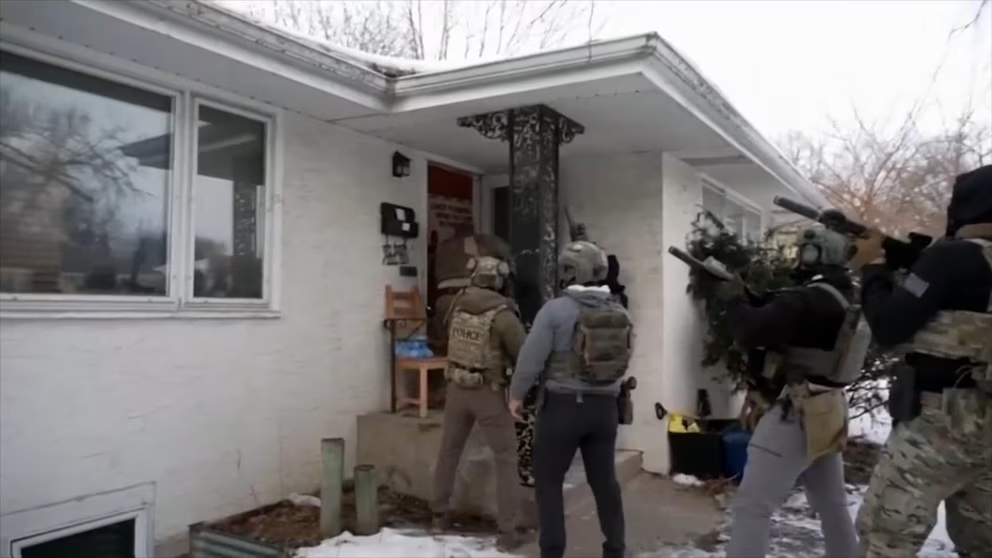
ICE showed up at our house for the second day in a row. Four cars yesterday, five today. I was alone with the baby when they arrived, rolling in slowly, stepping out to stare, taunt, and take pictures. It was not about questions or warrants. It was about presence. It was about fear. And it did not work.
What unfolded was not an isolated encounter but a familiar pattern many families say they recognize immediately. The slow drive-by. The deliberate pause. The cameras raised not for evidence, but for intimidation. The goal is not subtle. It is to overwhelm, to project power, to isolate people in their own homes and convince them that resistance is pointless. This kind of display relies on spectacle more than law, on intimidation more than authority.
In moments like these, fear is meant to do the heavy lifting. Fear is supposed to make people hide, shrink, and comply without a word. It is supposed to fracture communities, turn neighbors into silent witnesses, and convince families that they stand alone. The presence of multiple vehicles, uniformed agents, and cameras is carefully staged to reinforce that illusion. Power, when performed loudly enough, hopes no one questions whether it is real.

But power built on intimidation has a weakness. It only works when people believe in it. When fear is refused, the spectacle begins to crack. The agents can circle a house, but they cannot force obedience from someone who understands the performance for what it is. They can attempt to isolate, but they cannot erase the knowledge that others are watching, listening, and standing ready to show up.
This is why fascism depends not just on force, but on complicity. It needs silence to feel like consent. It needs neighbors to look away and communities to pretend nothing is happening. When people refuse that role, when they speak plainly about what they see and experience, the illusion of invincibility weakens. Terror loses its echo when it is named out loud.
In Minneapolis, that refusal has become part of the city’s identity. This is a place shaped by organizing, by protest, and by the understanding that collective presence matters. When one household is targeted, others pay attention. When intimidation is attempted, it is met not with disappearance, but with visibility. The message is simple and repeated often. You are not alone, even when they want you to feel like you are.
The image of a parent alone with a baby while government vehicles line the street is meant to be haunting. It is meant to linger long after the engines leave. Yet it also exposes the imbalance at the heart of these encounters. Five cars, multiple agents, cameras raised, all to assert control over a single household. That contrast reveals less about strength and more about insecurity. True authority does not need to announce itself with a parade.
What sustains communities in these moments is not bravado, but connection. Defiance does not always look loud or dramatic. Sometimes it looks like staying in your home, holding your child, and refusing to internalize the fear being projected onto you. Sometimes it looks like telling the story afterward, so others recognize the pattern and prepare themselves to resist it too.
The attempt to intimidate failed because it relied on an old script. It assumed obedience would follow fear. It assumed isolation would be accepted. It assumed power only flowed in one direction. Minneapolis has rewritten that script before, and it is doing so again. The city does not cower. It watches, it remembers, and it stands together.
In the end, the cars leave, the cameras lower, and the street returns to quiet. What remains is not the fear they tried to plant, but the resolve they underestimated. Fascism may thrive on spectacle, but it collapses when the audience refuses to play its part.





10 MINUTES AGO: Washington in Panic as President Donald Trump Shot Again While Exiting the White House and Urgently Rushed to the Hospital – Is This a Stunt to Distract from the Epstein Files? Here Are the Full Details

Furious Rep Melanie Stansbury Takes a Bold Move against Trump and his Associates in the Epstein Files after her recent interview, but she might not be safe after this move

BREAKING: Bad Bunny Files Stunning $500 Million Lawsuit Against Donald Trump, Claiming The President’s Super Bowl LX Halftime Remarks Were Made With “Actual Malice” and it’s Causing Severe Reputation Damage

Travis Kelce and Taylor Swift Turn Heads After Appearing at NFL Honors, and Fans Can’t Stop Talking About Taylor’s Unusually Elegant Silver Mini Dress… See Photos

Travis Kelce admitted to cheating on fiance Taylor Swift’s because…

Taylor Swift calls off engagement and wedding plans with Ex Travis Kelce and reveals one shocking reason why

“Why am I being dragged into this?”: Travis Kelce frustrated as Taylor Swift parents stops him from getting married to their daughter because of Austin

“Travis Has Crossed the Line” — Taylor Swift Breaks Her Silence and Reveals What Travis Kelce Did That She Says She Will Never Forgive

Taylor Swift Announces Her Mom and Dad Are Divorcing, Then Says “Travis and I Are No…” — Full Details

Taylor Swift Secretly Bought the Kansas City Chiefs for $14 Billion — Sources Say She Did It to “Protect Travis’s Legacy”

JUST IN: House Democrats are said to be only five votes short of moving forward with Trump’s impeachment, as political pressure rises and a single vote could shift the outcome in Washington.
