
NEWS
The Justice Department has DELETED all the files which had various allegations against Trump, including rape and trafficking in the newly released Epstein files

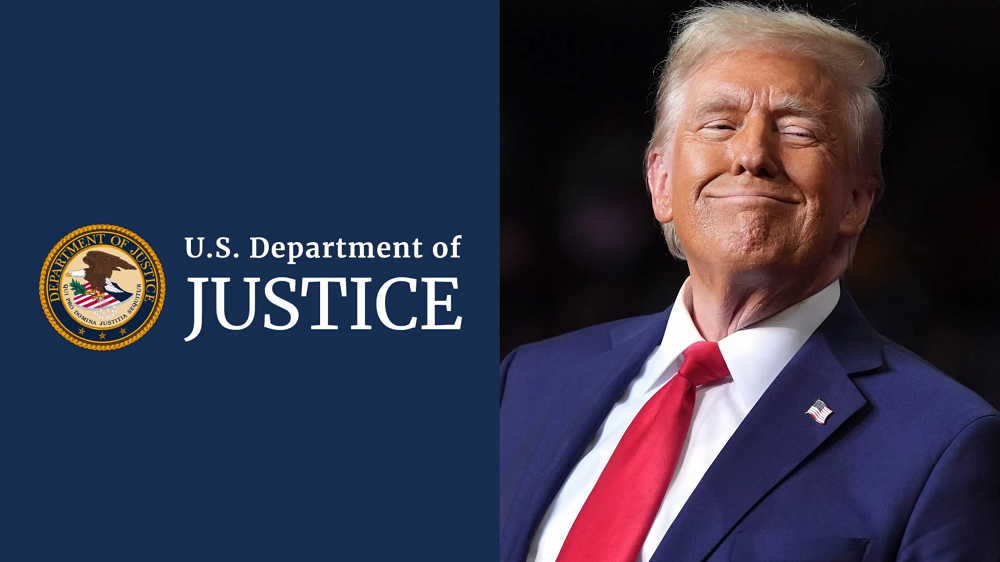
Shockwaves are rippling through political and legal circles after claims emerged that the Justice Department has deleted files tied to the newly released Jeffrey Epstein materials—files that allegedly contained serious allegations against Donald Trump, including rape and trafficking. The assertion, explosive in both scope and implication, has immediately triggered outrage, denials, confusion, and a fresh wave of mistrust toward institutions already under intense public scrutiny.
According to the claims circulating online and among activist legal observers, certain digital records once associated with Epstein-related disclosures are no longer accessible through Justice Department systems. The most incendiary part of the allegation is not merely that files are missing, but that they reportedly referenced accusations involving Trump—accusations that, if preserved and examined, could have fueled renewed legal and public accountability debates. At this stage, however, what exactly existed, what was removed, and why remains fiercely contested.
The Justice Department has not publicly confirmed that it deleted files connected to Trump, nor has it acknowledged removing any materials for the purpose of shielding a political figure. Officials and legal analysts caution that the Epstein case has generated a massive, chaotic archive over many years, spread across jurisdictions, agencies, and courts. Records can be sealed, redacted, reclassified, or removed from public-facing databases for procedural reasons that do not necessarily equate to destruction or concealment. Still, the timing and nature of these claims have raised eyebrows.
What has intensified the reaction is the broader context. Epstein’s network involved powerful individuals across politics, business, and entertainment, and the public has long suspected that full accountability was never delivered. Each new release of documents revives the same unresolved question: who was protected, and by whom? Against that backdrop, any suggestion that files naming a former president were deleted lands like gasoline on an already burning fire.
Trump has repeatedly denied any wrongdoing connected to Epstein, emphasizing that he was never charged and that he distanced himself from Epstein years before the financier’s arrest. Supporters argue that the current claims are another example of politically motivated narratives built on speculation rather than evidence. They warn that repeating unproven allegations risks turning rumor into assumed guilt, especially in a climate where distrust spreads faster than verification.
Critics, however, see something darker. They argue that even the appearance of missing files undermines confidence in the justice system. For them, the issue is not whether allegations are ultimately proven, but whether all relevant records are preserved and transparently handled. In their view, deletion—intentional or accidental—feeds a perception that powerful figures exist above the rules that govern everyone else.
Legal experts stress that the word “deleted” itself can be misleading. In many federal systems, records may be removed from one database while still existing in another archive, or temporarily taken offline pending review, litigation, or privacy concerns. Without clear documentation, it is difficult to determine whether files were destroyed, relocated, sealed, or never formally entered into the system in the first place. Yet the lack of immediate clarity has only deepened suspicion.
Social media reaction has been swift and brutal. Some users describe the alleged deletions as proof that accountability in America is selective. Others warn that misinformation surrounding the Epstein case has become so pervasive that even legitimate procedural actions are instantly framed as conspiracies. Between those poles sits a growing group of Americans who simply no longer know whom to trust.
What makes this moment especially volatile is how it intersects with an already polarized political environment. Trump remains a central figure in American life, and any claim touching on sexual violence or trafficking—particularly when linked to Epstein—cuts straight to raw nerves. The Justice Department, meanwhile, finds itself once again accused of either political bias or institutional weakness, depending on who is speaking.
Until verifiable evidence emerges clarifying what files existed, what their contents were, and what exactly happened to them, the story will remain suspended between allegation and denial. But the damage, at least to public confidence, may already be done. The perception that records can vanish—especially those involving the powerful—reinforces a sense that transparency is fragile and justice negotiable.
For now, the unanswered questions are louder than any official statement. Were files actually deleted, or merely moved? If allegations existed, why were they never fully addressed? And if nothing improper occurred, why does the system once again appear unable to communicate clearly and convincingly with the public?
In the long shadow of the Epstein scandal, even uncertainty feels like confirmation to many. And until the Justice Department provides a clear, documented account of what happened to the missing materials, the suspicion will linger that something important—whether evidence, trust, or truth—has been lost.












Taylor Swift and Travis Kelce Hold Hands Following Dinner Date Night in N.Y.C.

OMG!! Taylor Swift and Travis Kelce Finally Confirm That… See Full Details

Taylor Swift’s new song “Cleveland!” is a love letter to Travis Kelce… and a message to the haters!

Taylor Swift’s Sweetest Moment Steals the Spotlight as She Cheers for Husband Travis Kelce, Shouts “That’s My Husband,” Then Shares a Heartwarming Hug With Mama and Papa Kelce…See full video ⤵️

Taylor Swift’s Sweetest Postgame Moment Yet as She Runs Straight Into Husband Travis Kelce’s Arms After Chiefs-Colts Clash, Sharing a Hug and Celebrating Together on the Field after dramatic winner where Travis Scored a Touchdown .See full video … “

Kansas City Chiefs Announce They Will Cover Full Funeral Costs for Dillon, Isabella and 2-Year-Old Easton — Three Devoted Chiefs Fans Tragically Killed in Southeast Kansas House Fire 💔🏈 Details in the comment 👇

Taylor Swift Breaks NFL Protocol Again and Rushes to the Field to Celebrate, Hug, and Kiss Husband Travis Kelce After Chiefs’ Stunning 33–30 Overtime Win Over the Colts – Mom Andrea Swift Seen Chasing Her Daughter to Caution Her as Overexcited Taylor Couldn’t Hold Herself Back, While Patrick Mahomes Couldn’t Hold Back His Laughter… See the Full Never-Before-Seen Clip and Photos…

Taylor Swift Reveals Her Mom Is Facing Cancer Again: ‘I Give All of My Worry to Real Problems Now’

Travis Kelce Gives Fans a Glimpse Into His Family Vacation in St. Barts as Wife Taylor Swift Relaxes Under the Tent While He Shows Off His Unexpected Master-Chef Skills During a Fun-Filled Outdoor Cooking Moment..See the videos and photos

OMG!! Taylor Swift and Travis Kelce Finally Confirm That… See Full Details

“Taylor Swift went grocery shopping with Travis Kelce’s mom, Donna, and sister-in-law, Kylie. The pop star is already fitting right in with the family and is also looking like…See 10 Beautiful Photos
