
NEWS
U.S. Senator Ed Markey Calls for the 25th Amendment to Remove Trump From Office After Alarming Remarks About Greenland, Norway, and the Nobel Peace Prize – White House Pushes Back as Experts Say Removal Is Unlikely

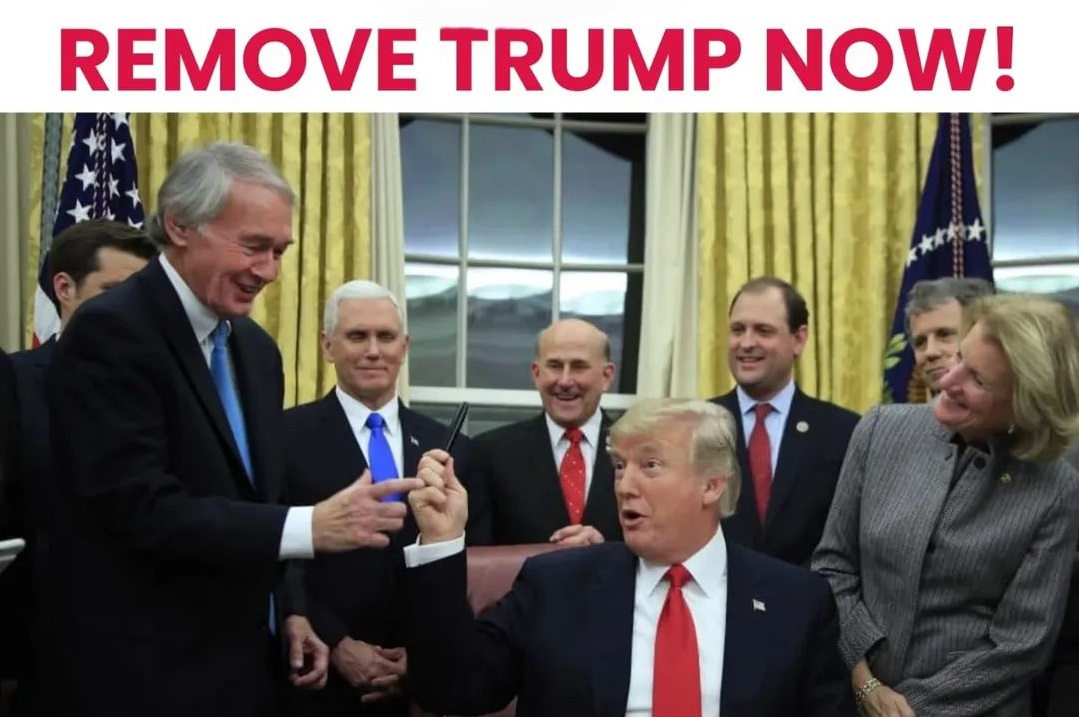
U.S. Senator Ed Markey of Massachusetts has ignited a political firestorm after publicly calling for the 25th Amendment to be invoked against President Donald Trump, arguing that recent comments attributed to the president raise serious concerns about his fitness to remain in office. The call, dramatic and rare, has quickly drawn national attention—reviving deep questions about presidential power, mental fitness, and national security.
At the center of the controversy are reports describing Trump’s comments linking Greenland, NATO ally Norway, and the Nobel Peace Prize. According to those reports, Trump suggested that not receiving the Nobel Prize freed him from having to focus primarily on peace, allowing him instead to pursue U.S. interests without restraint. For Markey, those remarks crossed a line.
In a public statement and a social media post sharing a news report on the issue, Markey argued that such thinking shows dangerous judgment at the highest level of government. He warned that a president who frames peace as optional—or conditional on personal recognition—poses a risk not only to U.S. credibility abroad but also to global stability.
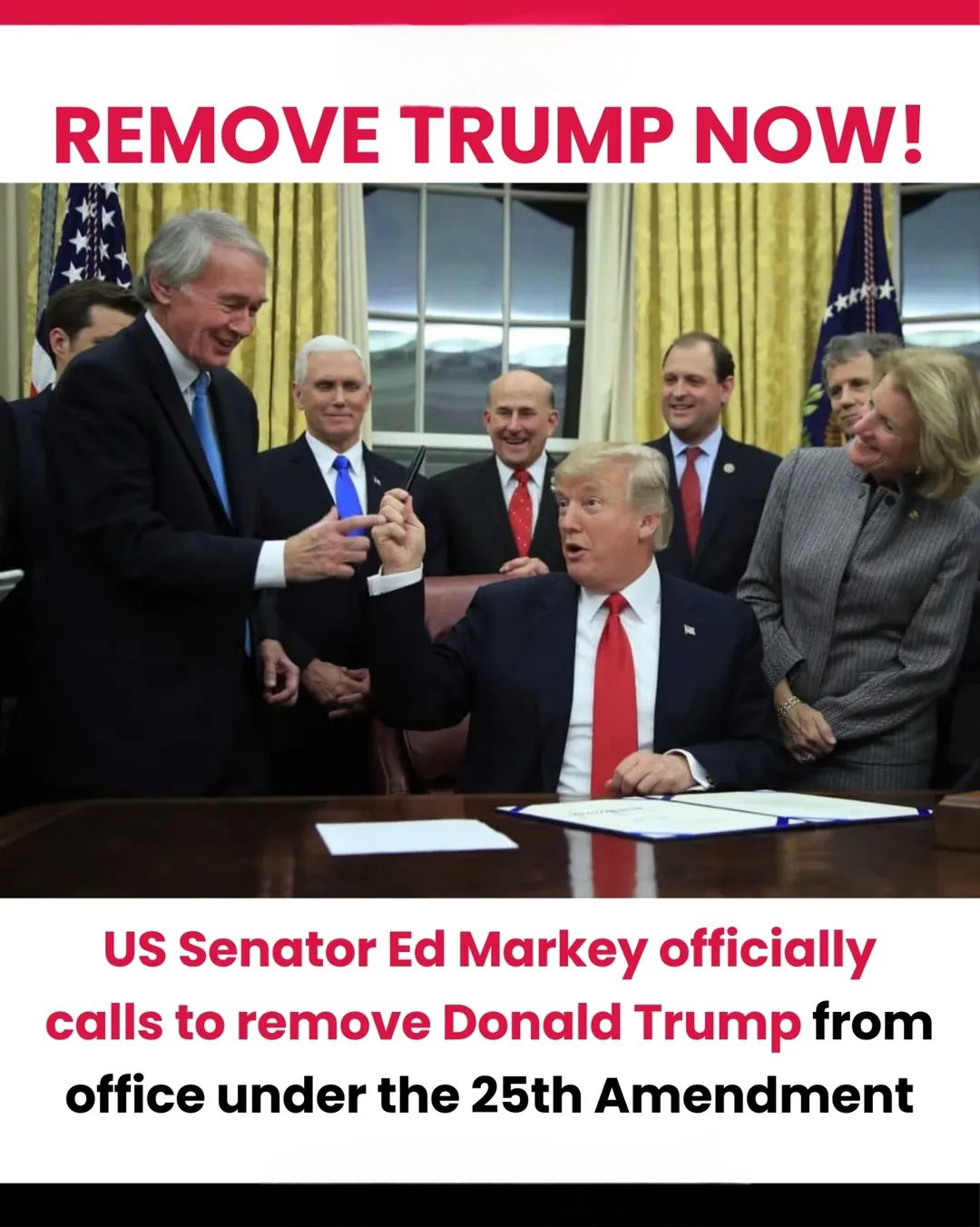
“This is not about politics,” Markey’s message implied. “It is about national security.” He suggested that when a president’s words raise doubts about decision-making in matters involving allies, military power, and diplomacy, Congress has a responsibility to take those concerns seriously.
The 25th Amendment, ratified in 1967, provides a constitutional mechanism for removing a sitting president who is deemed unable to discharge the powers and duties of the office. Unlike impeachment, which focuses on misconduct, the 25th Amendment is about capacity and fitness. To invoke it, the vice president and a majority of the Cabinet must agree that the president is unfit, after which Congress may be required to weigh in if the president contests the decision.
That high bar is why legal scholars and constitutional experts say Markey’s call, while attention-grabbing, is unlikely to succeed.
The White House wasted little time responding. Officials dismissed Markey’s demand as “political theater,” framing it as yet another partisan attack rather than a serious constitutional effort. Supporters of Trump echoed that response, arguing that controversial or provocative remarks do not amount to incapacity and that policy disagreements should be settled at the ballot box, not through extraordinary constitutional measures.
Still, Markey’s call struck a nerve because it taps into a long-running debate about Trump’s leadership style and rhetoric. Critics argue that Trump often speaks impulsively, blurs the line between personal grievances and national policy, and treats complex international relationships as transactional or symbolic rather than strategic. Supporters counter that his bluntness is honesty, and that his approach puts American interests first in a world that often exploits U.S. restraint.
The Nobel Peace Prize reference, in particular, drew intense scrutiny. The prize is often symbolic, awarded for diplomacy, negotiation, or conflict resolution. For Markey and others, the idea that failing to receive such recognition could be framed as justification for abandoning peace-focused leadership was deeply unsettling. They argue that peace should never depend on personal validation.
Foreign policy experts note that comments involving NATO allies like Norway are especially sensitive. NATO relies heavily on trust, predictability, and shared commitments. Even rhetorical signals that suggest wavering priorities can ripple outward, affecting how allies and adversaries calculate their next moves.
Yet despite the outrage, the legal reality remains stark. Invoking the 25th Amendment would require Vice President JD Vance and a majority of the Cabinet to turn against a sitting president from their own administration. Even then, Congress would likely become involved, and the political consequences would be immense. Historically, the amendment has never been used to permanently remove a president against their will.
That gap between outrage and feasibility is where this story now sits—caught between alarm and improbability.
For Markey, the call itself may be the point. By raising the issue publicly, he forces a national conversation about standards of leadership, mental fitness, and the responsibilities that come with nuclear codes and global influence. Even if removal is unlikely, the warning is now on record.
For the White House and Trump’s allies, the response is equally clear: this is politics, not a crisis. They argue that strong language, unconventional thinking, or frustration with international recognition does not equal unfitness for office.
As the debate rages on, one thing is certain: the 25th Amendment, rarely discussed outside textbooks and crises, has once again been dragged into the spotlight. And in a deeply divided country, even the suggestion of invoking it is enough to deepen tensions—raising the stakes of an already volatile political moment.

Serena Williams had a special moment with her family after winning her first match back in 4 years…

Serena Williams Returns to the Spotlight, Reminds the World Why She’s a Tennis Icon…

Serena Williams Expands Comeback Plans With Berlin Doubles, Sparking Global Tennis Buzz…

BREAKING NEWS: Serena Williams’ Potential Comeback Sparks Debate: Agassi Weighs In on Challenges Ahead…

Serena Williams is all legs in slit-up-to-there sequined gown at pre-Met Gala 2026 party…

“I have nothing to prove, only things to gain” Serena Williams speaks ahead of her comeback at the HSBC Championships…

See Serena Williams picture that makes people talking…

Serena Williams is not just a tennis queen… she’s pure inspiration! ❤️ From dominating the court to stealing hearts everywhere…

Serena Williams said Nobody wished my daughter Olympia a happy birthday today…

From dominating courts worldwide to building a life of luxury and family balance, Serena Williams and her husband Alexis Ohanian have crafted a stunning 8-acre estate in Jupiter, Florida. Valued at $5.2 million.

Unbelievable : Does Serena Williams deserve a statue outside Arthur Ashe Stadium? said by her fans…
