
NEWS
ICE Caught Stealing From the People They Arrest in Minnesota – Agent Photographed Wearing a Gold Bracelet Allegedly Taken From a Man During an Arrest

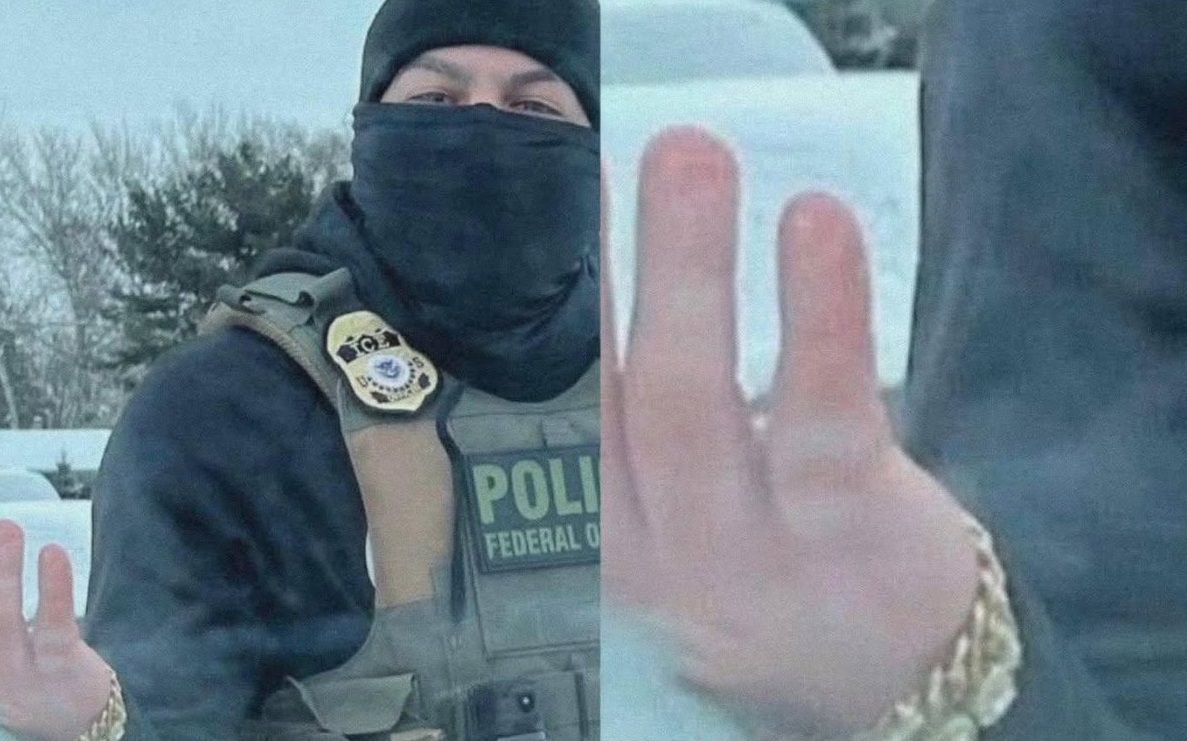
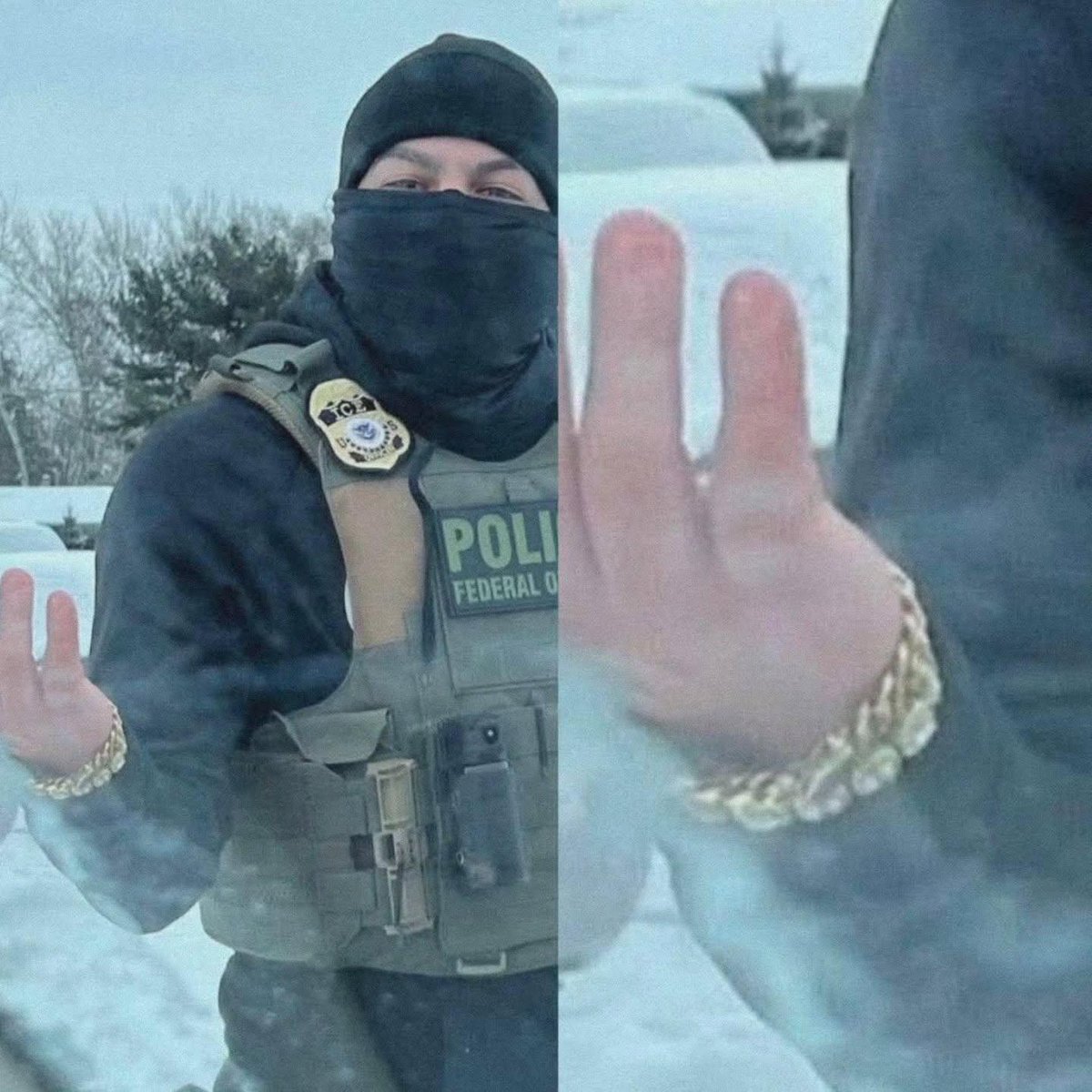
The photograph is what stopped people cold. An ICE agent, uniformed and on duty in Minnesota, wearing a gold bracelet that did not appear to belong to him. According to allegations now circulating widely, the bracelet was taken from a man during an arrest. No courtroom has ruled on it. No official finding has yet been released. But the image alone was enough to trigger a wave of anger, disbelief, and a far darker sense of recognition.
For many who saw it, the issue wasn’t just whether an agent may have stolen personal property. It was what that act symbolized. The power imbalance. The vulnerability of the person being arrested. And the idea that, in moments when the state exercises its most forceful authority over the body and freedom of an individual, someone might also be helping themselves to that person’s most personal belongings.
The allegation, if proven, would represent more than simple theft. It would be a violation of trust, of law, and of basic human dignity. People who are detained—regardless of immigration status—do not lose their right to personal property or to be treated as human beings. Confiscation during arrest is supposed to be documented, secured, and returned or processed through legal channels. Anything outside of that crosses a line.
That is why the reaction has been so visceral. Almost immediately, observers began drawing comparisons to one of history’s most notorious examples of state-sanctioned theft: Nazi Germany. The comparison is not about scale or outcome, but about pattern and warning signs.
The Nazis did not begin with extermination camps. They began with dehumanization and normalization. Jewish people were systematically stripped of rights, then of property, then of identity. As families were forced onto trains, officials confiscated money, jewelry, and documents. At killing sites such as Babyn Yar near Kyiv, victims were robbed of watches, rings, and chains as part of an organized process. Even after death, wedding rings, gold dental fillings, and other valuables were removed, melted down, or shipped as bullion, feeding the Nazi gold reserves.
Beyond jewelry, entire lives were cataloged and looted. Cash, artwork, ritual silver, furniture, clothing, and other personal effects were sorted, sold, reused, or distributed. These stolen goods propped up the German war economy and enriched officials and collaborators. Theft was not a side effect of cruelty—it was a feature of it.
That history is why images like this bracelet provoke such fury. When people see agents of the state accused of taking valuables from those in their custody, it triggers an alarm that goes far beyond a single incident. It raises the question: if this is happening at all, how often does it happen unseen? And what kind of culture allows it?
To be clear, an allegation is not a conviction. Due process matters, even for those accused of abusing power. But so does accountability. When authorities operate behind masks, without visible identification, and with limited oversight, public trust erodes. Every credible accusation left unanswered deepens suspicion and fear—not just among immigrants, but among citizens who understand that unchecked power rarely stays confined to one group.
What makes this moment especially disturbing is the sense of repetition. History does not usually return in identical form. It echoes. It rhymes. It starts small, often dismissed as exaggeration or hysteria, until patterns become undeniable. People are not saying that America is Nazi Germany. They are saying they recognize the early behaviors that, once normalized, led to atrocities elsewhere.
A gold bracelet should never carry this much symbolic weight. Yet here it is, hanging on an agent’s wrist in a photograph that refuses to be ignored. It represents a simple question with enormous consequences: when the state takes someone’s freedom, will it also take their humanity?
That question demands answers—clearly, publicly, and soon. Because history has already shown what happens when theft, dehumanization, and power go unchallenged. And it is, as many have said, disgusting to see even the faintest suggestion of it happening again.

Taylor Swift Reveals Her Mom Is Facing Cancer Again: ‘I Give All of My Worry to Real Problems Now’

Travis Kelce Gives Fans a Glimpse Into His Family Vacation in St. Barts as Wife Taylor Swift Relaxes Under the Tent While He Shows Off His Unexpected Master-Chef Skills During a Fun-Filled Outdoor Cooking Moment..See the videos and photos

OMG!! Taylor Swift and Travis Kelce Finally Confirm That… See Full Details

“Taylor Swift went grocery shopping with Travis Kelce’s mom, Donna, and sister-in-law, Kylie. The pop star is already fitting right in with the family and is also looking like…See 10 Beautiful Photos

Taylor Swift and Travis Kelce Melt Hearts With a Sweet Garden Embrace and Playful Barefoot Dance, Giving Fans a Rare Glimpse Into Their Fun-Filled, Romantic Married Life as They Unwind Together Before the Kansas City Chiefs’ Big Game

TAYLOR SWIFT AND TRAVIS KELCE’S QUIET POST-GAME MOMENT MELTS HEARTS! After the NFL Game, the Couple Retreats to a Peaceful Private Setting, Sharing a Tender Kiss and Sweet Glances Through the Window as They Simply Enjoy Being Close to Each Other..

Looks Like His Wife Dresses Him’ — Fans Sense Taylor Swift in Travis Kelce’s Stylish Outfit for Chiefs Preseason Game 1

Taylor Swift and Brittany Mahomes plan to surprise their husbands and to support their game tonight…

NO LONGER THE RUMOR: Just one hour ago, Travis Kelce dropped the long-awaited announcement we’ve all been hoping for…

Travis Kelce flashes his wedding ring as he arrives for first Chiefs game tonight since marrying Taylor Swift… but his new wife is not spotted in the stands…

Travis Kelce Spotted on a Stroll With Wife Taylor Swift and a Baby Bump Just Weeks After Their Wedding, and Fans Are All Saying the Same Thing… See the Photos
