
NEWS
Minneapolis Police Chief Brian O’Hara told his officers that they have a DUTY to intervene if they see ICE committing crimes and will be FIRED if they don’t. EVERY police chief should follow his lead.

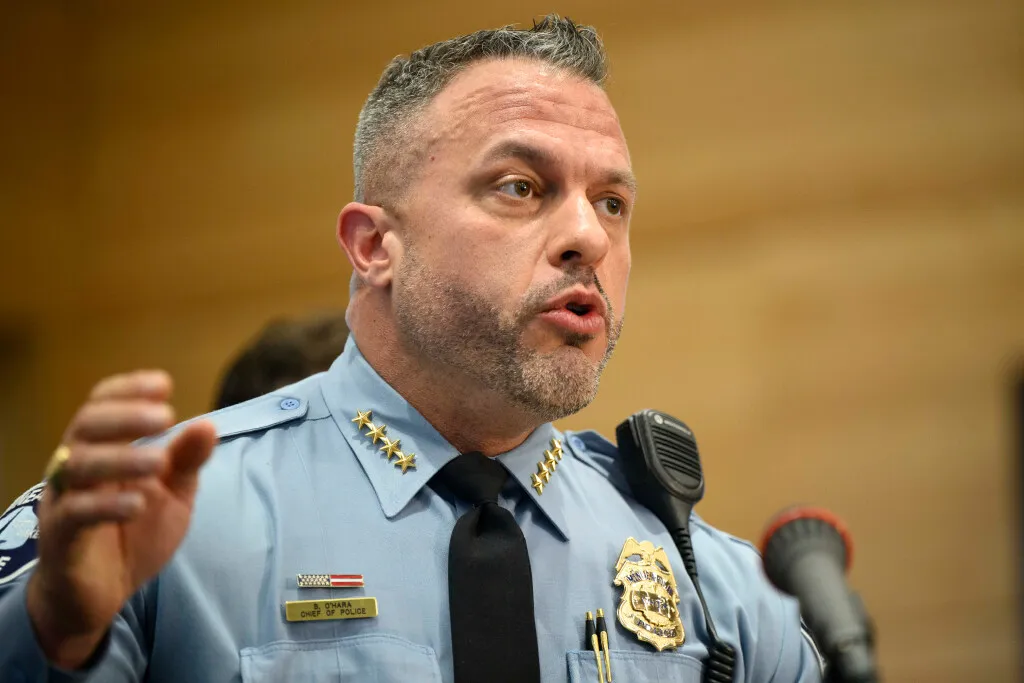
Minneapolis Police Chief Brian O’Hara has ignited a national conversation with a message that is as simple as it is explosive: if a Minneapolis police officer witnesses ICE committing a crime or using unlawful force and does nothing, that officer could be fired. In an era where law enforcement agencies often avoid confronting one another, O’Hara’s statement cuts directly against long-standing norms of silence, jurisdictional caution, and institutional loyalty.
The directive comes at a time when Minneapolis remains deeply scarred by its history with police violence and public mistrust. Years after the murder of George Floyd, the city is still under intense scrutiny, still rebuilding, and still trying to prove that “never again” is more than a slogan. For O’Hara, allowing officers to look the other way while federal agents violate the law would undermine every promise of reform the department has made. His position reframes accountability not as an optional moral stance, but as an enforceable duty.
What makes the statement especially striking is that it directly challenges the assumption that federal agents operate beyond meaningful local oversight. ICE agents are often perceived as untouchable by local authorities, shielded by federal jurisdiction and political backing. O’Hara’s message rejects that premise outright. The badge, he suggests, does not grant immunity. If a crime is committed in Minneapolis, it is still a crime, regardless of which agency commits it.
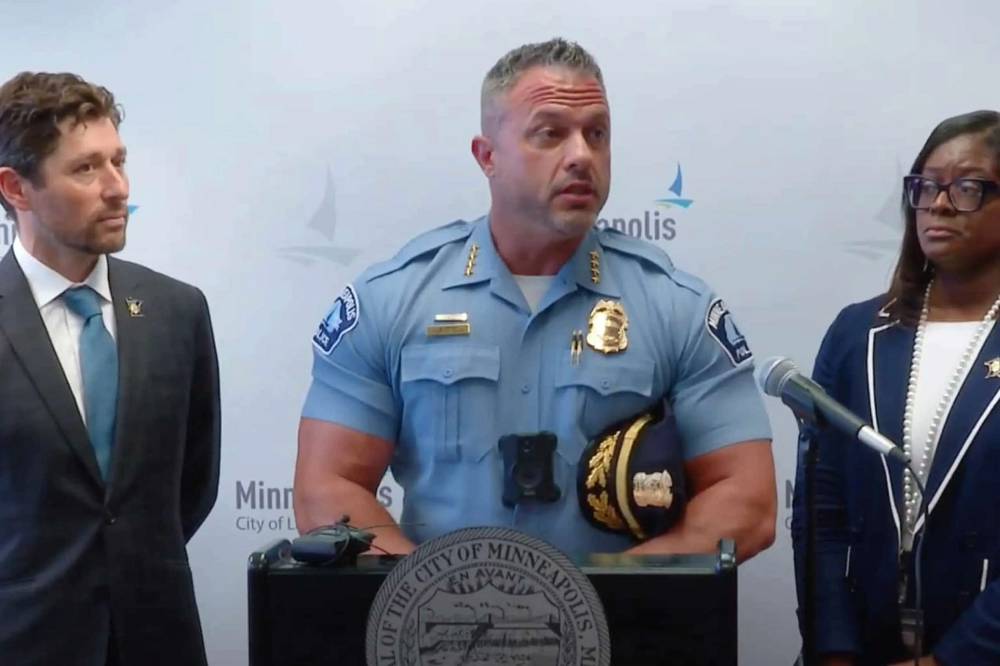
Supporters argue that this is exactly the kind of leadership modern policing requires. They see O’Hara’s stance as a continuation of the duty-to-intervene principles adopted after 2020, when departments across the country acknowledged that silence by fellow officers enables abuse. In this view, watching ICE violate someone’s rights and doing nothing is no different from watching a fellow local officer do the same. Accountability, they say, cannot stop at agency boundaries.
Critics, however, warn that the real world is far more complicated. Federal agents operate under different authorities, legal protections, and chains of command. Asking local officers to intervene could create dangerous confrontations between armed agencies, escalate volatile situations, and expose officers to legal risks. Skeptics also question how enforceable the threat of termination really is, arguing that such discipline would almost certainly be challenged and dragged through years of legal battles.
Yet even critics acknowledge that the message itself matters. By drawing a clear moral line, O’Hara has forced a question many departments avoid: what does “serve and protect” actually mean when harm is coming from another uniform? For communities that have watched federal immigration enforcement unfold with fear and anger, the statement feels like a rare moment of institutional recognition that their concerns are valid.
The timing is also impossible to ignore. Federal immigration actions have intensified, and public frustration with aggressive tactics has grown. Protests, viral videos, and firsthand accounts have fueled a sense that ICE operates with little regard for local fallout. In that climate, O’Hara’s stance reads not just as a policy reminder, but as a warning that Minneapolis will not be a passive stage for actions that inflame fear and division.
Whether every police chief in America follows his lead remains to be seen. Many won’t, constrained by politics, union pressure, or fear of federal retaliation. But Minneapolis has once again become a testing ground for what modern accountability looks like. The city that forced a global reckoning on policing is now asking another uncomfortable question: if the law applies to everyone, who is brave enough to enforce it when it’s hardest?
In the end, O’Hara’s statement may be remembered less for how often it is enforced and more for what it represents. It signals a shift from quiet complicity to declared responsibility. And in a country still struggling to define justice, that shift alone is enough to make people pay attention.

Taylor Swift Reveals Her Mom Is Facing Cancer Again: ‘I Give All of My Worry to Real Problems Now’

Travis Kelce Gives Fans a Glimpse Into His Family Vacation in St. Barts as Wife Taylor Swift Relaxes Under the Tent While He Shows Off His Unexpected Master-Chef Skills During a Fun-Filled Outdoor Cooking Moment..See the videos and photos

OMG!! Taylor Swift and Travis Kelce Finally Confirm That… See Full Details

“Taylor Swift went grocery shopping with Travis Kelce’s mom, Donna, and sister-in-law, Kylie. The pop star is already fitting right in with the family and is also looking like…See 10 Beautiful Photos

Taylor Swift and Travis Kelce Melt Hearts With a Sweet Garden Embrace and Playful Barefoot Dance, Giving Fans a Rare Glimpse Into Their Fun-Filled, Romantic Married Life as They Unwind Together Before the Kansas City Chiefs’ Big Game

TAYLOR SWIFT AND TRAVIS KELCE’S QUIET POST-GAME MOMENT MELTS HEARTS! After the NFL Game, the Couple Retreats to a Peaceful Private Setting, Sharing a Tender Kiss and Sweet Glances Through the Window as They Simply Enjoy Being Close to Each Other..

Looks Like His Wife Dresses Him’ — Fans Sense Taylor Swift in Travis Kelce’s Stylish Outfit for Chiefs Preseason Game 1

Taylor Swift and Brittany Mahomes plan to surprise their husbands and to support their game tonight…

NO LONGER THE RUMOR: Just one hour ago, Travis Kelce dropped the long-awaited announcement we’ve all been hoping for…

Travis Kelce flashes his wedding ring as he arrives for first Chiefs game tonight since marrying Taylor Swift… but his new wife is not spotted in the stands…

Travis Kelce Spotted on a Stroll With Wife Taylor Swift and a Baby Bump Just Weeks After Their Wedding, and Fans Are All Saying the Same Thing… See the Photos
